Ads Cloaking Facebook: How the Black Hat Technique Works and Why It’s Banned
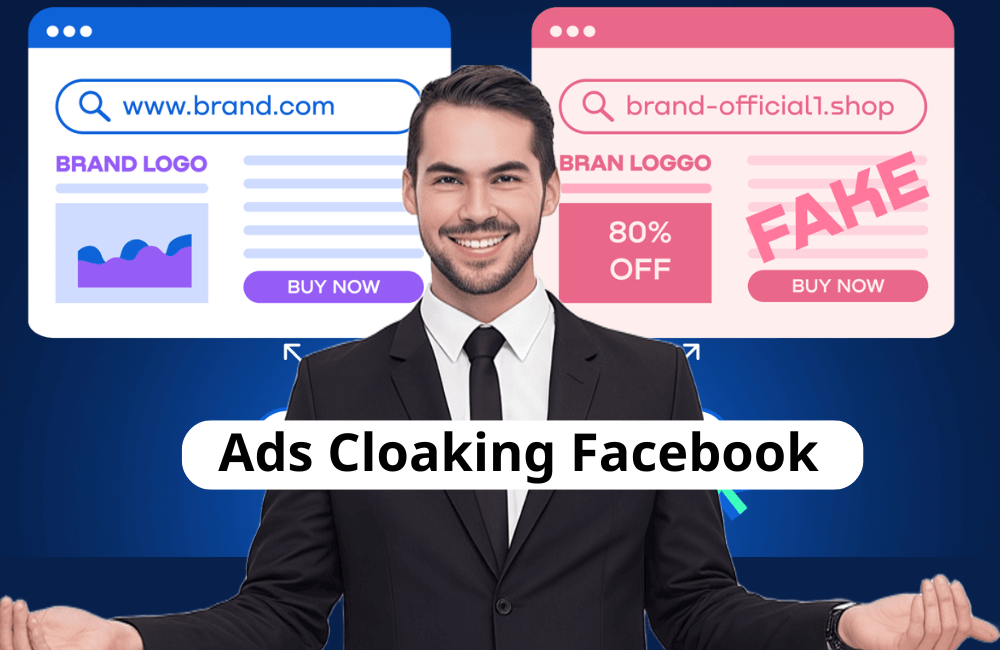
Facebook is currently one of the world’s largest traffic sources, with over 3 billion monthly active users and an accurate ad targeting system that helps marketers reach the right potential customers. However, along with that huge potential comes Facebook’s extremely strict advertising policies. These regulations make it difficult for many advertisers who want to run campaigns related to sensitive products, “gray” services, or restricted content. Therefore, some have sought to circumvent the rules using “black hat” techniques to trick Facebook’s review system by using cloaking and agency ad accounts.
So, what exactly is ad cloaking, how does it work, and why does Facebook absolutely prohibit this technique? Let BlackHatWorld explore all the secrets behind this black hat tactic in the article below.
Ads Cloaking Facebook. You might not know!
In reality, cloaking is a technique used to differentiate between genuine user traffic and the censorship activities of the Facebook system. In other words, this is how advertisers “trick” the review department, helping ads that violate policies still get approved and displayed to real users.
Why does cloaking exist?
Facebook is the most powerful advertising platform in the world, with the ability to target demographics and user behavior with extreme accuracy. However, this platform has a strict policy system that prohibits advertising products and services such as tobacco, weapons, adult content, alcohol, gambling, dietary supplements, short-term loans, etc. This prevents many businesses and marketers from fully exploiting the potential of Facebook ads.
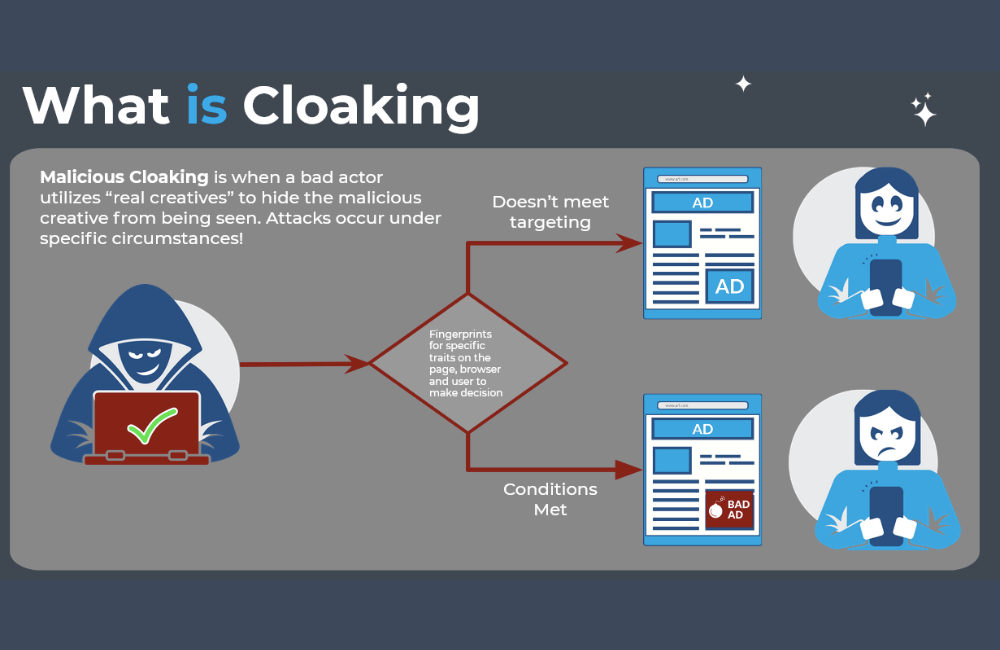
Faced with these barriers, some individuals and organizations have found ways to bypass rules, using cloaking techniques to get past the review process and reach real users, despite the risk of account suspension or permanent ban. “Black hat” marketers typically deploy intermediary server systems to display two different versions of the website:
- When Facebook’s review system (usually identified via IP address or a scanning bot) accesses the site, the server displays a “clean” content page that complies with the policies.
- When real users access the site via the ad, they see the real content, which is often pages selling prohibited or sensitive products and services.
Although Facebook does not publicly disclose the IP list of its review system, many advertisers still gather leaked information or use self-identifying IP tools to optimize the effectiveness of cloaking.
Although considered a serious violation, cloaking is still applied not only on Facebook but also on other advertising platforms. This is what makes many newcomers curious about how “sensitive” ads can still pass review and appear on their news feed. Facebook cloaking ads have thus become a topic that is both controversial and of great interest in the digital marketing community.
3 types of cloaking techniques are commonly applied in the Facebook advertising market.
For the reasons mentioned above, the cloaking technique is divided into three main types based on its purpose and implementation method. Here is a detailed look at each popular type of cloaking in Facebook advertising:
Black Hat Cloaking
This is a completely prohibited form of cloaking and is often associated with sensitive content or niches.
- Campaigns promoting gambling, betting, cryptocurrency, adult content, dating, dietary supplements, etc., often use this technique to bypass Facebook’s review.
- Black-hat cloaking deceives the reviewer by showing a “clean page” during the review process, while the real user is redirected to a destination page containing prohibited content.
- Some marketers also use cloaking to hide the traffic source from affiliate programs that do not accept adult or high-risk content.
Experienced people sometimes apply “whitewashing,” making black hat ads look like white hat ones to bypass the system. However, even if they pass the review, if users report them, the account can still be disabled or heavily penalized. If you still have problems with campaign cloaking, contact BlackHatWorld immediately.
BlackHatWorld Agency is a pioneer with over 10 years of experience in deploying ad campaigns for sensitive industries. We possess a powerful system of Facebook ad accounts with high reliability, helping many businesses overcome review barriers, reach the right target customers, and achieve sustainable revenue growth.
With a team of highly experienced practical experts, we provide comprehensive technical consulting and support services for each campaign, from setting up ad structures, optimizing content, installing measurement tools like Pixel and Domain Verify, to professional Fanpage management to ensure ads are approved quickly and operate most effectively.
Gray Hat Cloaking
The gray hat technique lies between legal and illegal, not directly violating policies but still posing risks.
- It is common in the SEO field, where search engine bots see a keyword-dense page, while users see more readable and natural content.
- The goal is to optimize search rankings without negatively impacting the user experience.
However, many search engines or advertising platforms may consider this deceptive behavior, leading to account penalties or a reduction in domain authority. This method is also applied in sensitive industries on Facebook. For example, to run political ads on Facebook, you need blue badge verification, but many new election candidates who do not yet qualify for verification can use cloaking ads to redirect voters to their website.
White Hat Cloaking
This is the most “legitimate” form of cloaking, typically used to improve user experience rather than bypass regulations.
- Users are categorized based on geographic location, interests, or search behavior to display relevant content.
- Search engines or e-commerce platforms often apply this technique to optimize localized content for each region.
- Additionally, filtering fraudulent traffic (such as bots, VPNs, irrelevant GEOs) to protect the advertising budget is also considered “white hat.”
The core point is: real users and the review team see the same content, ensuring transparency and non-violation of Facebook’s policies.
How the Cloaking Works and Why It’s Banned
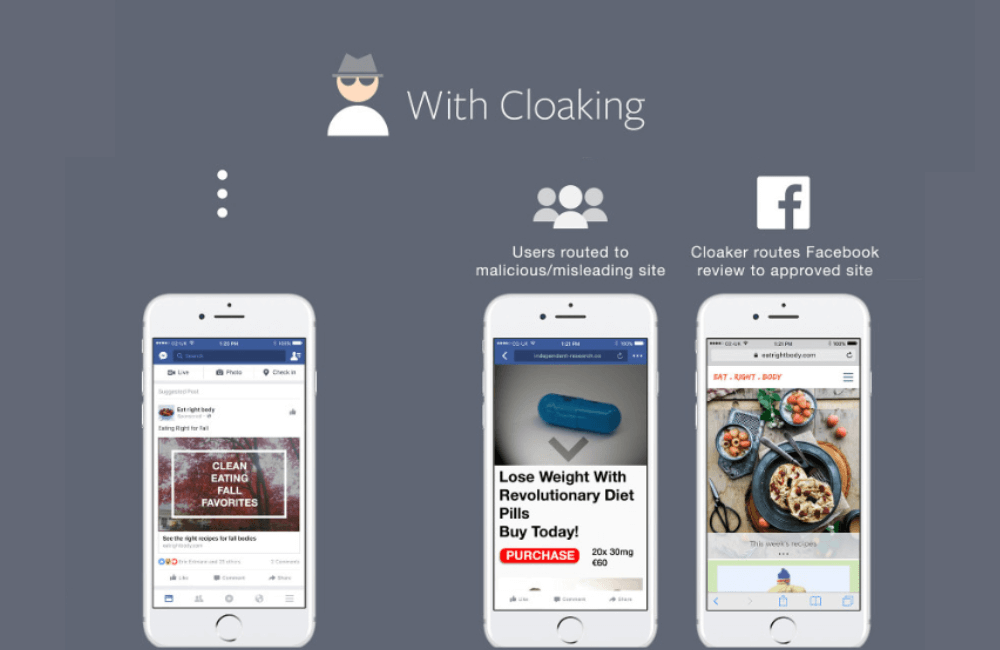
The black hat cloaking technique is one of the most sophisticated tricks in the digital advertising field, especially on Facebook. Essentially, this technique uses specialized commands executed by the web server to display two different versions of the same website: one for the platform’s review team (or bots), and one for real users.
When the server receives an access request, it analyzes whether the request comes from a regular user or a verifier (e.g., a review bot or an ad auditor). If the system detects it is a bot, the server displays a “white page” – a safe page that complies with Facebook’s ad policies. Conversely, if the visitor is a real user, the server redirects them to the landing page containing the actual content, which is often restricted products or services such as cryptocurrency, adult content, or online betting.
IP address-based identification method
One of the most common techniques used by black hat advertisers is filtering traffic based on the IP address.
- Whenever someone clicks on an ad, the server checks the IP address to determine if the request is coming from a real person or a verification bot.
- Advertisers often use a “blacklist” containing the IP addresses of bots or moderation specialists that Facebook commonly uses to review ads.
- If the IP address matches the blacklist, that person will only see a “white page”; otherwise, the real user will see the real content page, where the hidden product is fully displayed.
For example, if a black hat ad sells a banned dietary supplement, the Facebook reviewer (IP address identified) will only see a legitimate multivitamin sales page. But the real user sees a product for “rapid weight loss” or “super muscle gain” that Facebook does not allow to be promoted.
The User-Agent-based identification method
Besides the IP, many cloaking systems also identify through the “User-Agent,” which is the information about the browser, operating system, and device that the visitor is using.
- The server compares the name or characteristics of the User-Agent with a pre-installed blacklist.
- If it matches a bot, the system will display a White Page; otherwise, a real user will be redirected to the actual content page.
This method is easy to set up and deploy, but is less effective than IP because bots frequently change their identity (e.g., impersonating Chrome, Safari, or a regular mobile device).
Modern cloaking support services.
In recent years, Facebook and major advertising platforms have developed smarter moderation systems, even disguising themselves as regular users to detect fraud. This has made old hiding techniques less effective. Nevertheless, IP-based identification is still considered more reliable, as the IP address is generally harder to change than browser information.
Previously, advertisers who wanted to apply cloaking had to operate their own servers, write custom code, configure complex scripts, and manually update IP or bot lists themselves. However, everything has now become much simpler.
- Many specialized services help advertisers automate the entire process, from IP identification to bot filtering, without requiring deep technical knowledge.
- Some high-end paid cloaking services also use dual identification methods (IP + User-Agent), constantly updating databases to enhance the accuracy of detecting bots and auditors.
Why is the cloaking technique forbidden?
Although cloaking helps black hat advertisers bypass moderation to promote “sensitive” products and increase profits quickly, this is a serious violation of Facebook’s advertising policies.
- Facebook strictly prohibits any attempt to intentionally conceal the true content from the moderation system.
- Once detected, the ad account, fan page, or even the business manager and linked domain can be permanently banned.
Therefore, we always advise genuine advertisers to focus on building transparent, policy-compliant content to maintain sustainable operations and long-term brand protection on the Facebook platform.
Cloaking is a sophisticated black-hat technique that offers short-term benefits but poses many major potential risks. Using cloaking to bypass Facebook’s moderation can lead to your account, fanpage, or entire advertising system being permanently banned. Instead of looking for ways to “get around the rules,” advertisers should focus on transparent strategies, building quality content, and policy compliance for sustainable long-term growth.
Frequently asked questions
Yes. Facebook constantly updates its AI system and verification bots to detect cloaking behaviors, even when you use IP masking tools or change server configurations.
Advertisers should choose a legitimate approach, such as adjusting ad content, using a valid intermediate landing page, or registering for a Facebook-certified agency account to ensure long-term safety and effectiveness.
💬 Contact now for free consultation from BHW!
- Website: https://vi.blackhatworld.io/
- Telegram: @bhw_agency
- Whatsapp: +84819001811
- Wechat: bhwagency
- Email: [email protected]
This article is also available in other languages: