Facebook Ad Fees: The Ultimate Cost Breakdown for 2026
Facebook advertising has become an integral part of the marketing strategy for millions of businesses worldwide, from small brands to large corporations. However, a question that many business owners, advertisers, and marketers always ask is: “How much does Facebook ads cost, actually, and how to forecast the budget most accurately?”
With constant changes in algorithms, ad formats, and how Meta distributes ads in 2026, understanding the cost structure and factors affecting the budget has become more important than ever. In this article, BlackHatWorld will join you in a detailed analysis of all costs related to running Facebook ads, including how Facebook charges, factors that impact CPM, CPC, and CPA, and how to optimize the budget for maximum effectiveness. Whether you are running conversion campaigns, lead generation, brand awareness, or app promotion, understanding Facebook ad costs will help you make better decisions, optimize ROI, and enhance campaign performance sustainably.
Cost Caps after Facebook’s new UI Update
Cost cap can be simply understood as requesting Facebook to optimize to keep the cost per result around a desired level. For example, if your target CPA is 10 USD per order, you can set a cost cap at 10 or 11 USD. In practical operations, we primarily use cost caps with ABO; however, cost caps can also work well with CBO. The reason is that in ABO, we control each ad set more clearly, especially when testing or scaling high-performing ad sets.
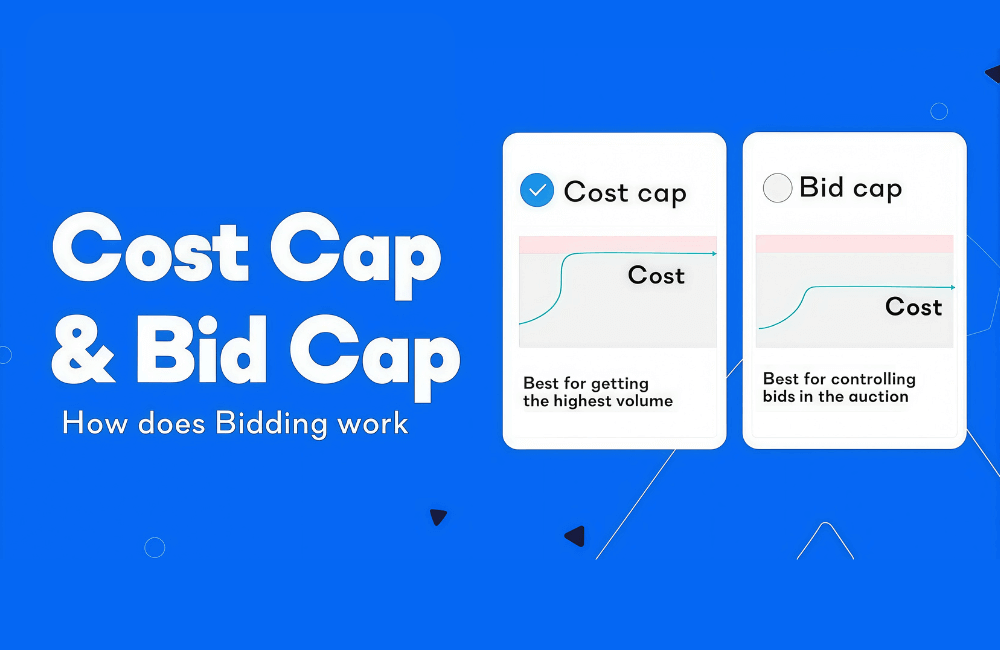
One important factor why we highly value the Cost Cap is its direct connection to the daily loop theory. According to this theory, Facebook optimizes ads through each loop during the day. When running multiple ad sets in parallel, especially when scaling aggressively, the phenomenon of cannibalization. However, while running Cost Cap, we have noticed that this phenomenon happens very rarely. When an ad set achieves effectiveness consistent with the set cost cap, Facebook tends to keep it stable instead of pushing the budget excessively to other ad groups. This helps the system operate more smoothly and with less volatility during scaling.
Cost Cap helps Scale safely without Indiscriminate Spending.
A major strength of Cost Cap that advertisers should clearly understand is spending safety. If an ad set or campaign cannot achieve the target cost, Facebook will simply not spend money or will spend very little.
For example, you set an ad set budget of 500 USD per day with a cost cap of 12 USD. If the market conditions that day are not suitable to achieve a CPA around this level, facebook may only spend 50 to 100 USD, rather than trying to exhaust the budget at all costs.
From a risk management perspective, this helps us avoid “burning money” during days with bad market conditions, declining creative effectiveness, or low user demand. Compared to running unlimited lowest cost, Cost Cap clearly provides a better sense of control. However, because of this characteristic, we do not view Cost Cap or Bid Cap as a strategy that can be absolutely trusted for every account. There are periods when it spends money very well, but also times when it barely spends at all, especially when the Cost Cap is set too low or market competition is high.
When does Cost Cap work most effectively?
In our practical experience, Cost Cap performs strongest during periods of high market demand, such as Black Friday, Cyber Monday, holidays, or major promotional events. If you are running a stable campaign at 1,000 USD per day and want to scale to 2,000 USD, Cost Cap is a very suitable choice. Instead of increasing the budget gradually and worrying about breaking the learning phase, you can boldly set a budget of 5,000 or even 10,000 USD for the campaign, while still keeping the cost cap at your target CPA.
Facebook will automatically decide how much money to spend based on the ability to find results within that Cost Cap range. If the market is good enough, the campaign will scale significantly. If not, it will self-restrain and not pose a major risk to the budget. Therefore, we often keep Cost Cap campaigns running year-round in the ad account. The goal is not always to scale, but to maintain a “healthy” status for the campaign. When arriving at golden moments like Black Friday or big sale events, we only need to push the budget high and let Cost Cap maximize the market potential.
Facebook Ad Fees: The Ultimate Cost Breakdown for 2026
Before discussing optimization or scaling, you need to understand very clearly: Facebook advertising costs are not just the numbers you deposit into the Ads Manager account. In 2026, the cost structure has become clearer but also more complex if advertisers do not grasp its nature. Below are all the expenses that you must consider when implementing Facebook ads professionally and sustainably.
Ad Spend
Ad spend is the amount of money you pay directly to Meta for ads to be distributed on Facebook, Instagram, or both platforms simultaneously. This is the core budget, and you have full control over it. On Meta, you can implement many different types of campaigns, such as prospecting campaigns to reach people who have never heard of the brand, campaigns targeting specific audience segments like interests or behaviors, or remarketing campaigns to re-engage those who have visited the website, added products to the cart, or interacted with the Fanpage.

Ad display costs are not fixed. CPM (cost per 1,000 impressions) will vary depending on many factors, such as the type of campaign you run, the geographical area you target, the level of industry competition, as well as the quality of the ad content. For example, the same product running in the US market usually has a higher CPM than in Australia, while the finance or insurance industry will have a higher CPM than the fashion or accessories industry.
Therefore, when determining the ad budget, we advise you to start with the actual financial capacity of the business. Many companies predetermine a monthly budget, for example, 30,000 USD per month, then divide it back into approximately 1,000 USD per day for easier management and optimization. This approach helps you control cash flow better and avoid uncontrolled spending.
Ads Management Costs
In addition to the direct payments to Meta, another expense that many advertisers often overlook is the ad management cost. This is the fee you pay to an agency or a professional team to set up, monitor, and optimize campaigns for you. In practice, we have encountered many cases where businesses run ads themselves, spending tens of thousands of dollars without clear results simply due to a lack of experience and a deep understanding of Facebook’s distribution algorithm. Hiring a professional partner is not about “spending more money,” but about minimizing risks and optimizing performance for every budget dollar. Ad management costs are usually divided into two main parts.
Initial campaign setup costs
The first part is the campaign setup cost. This is a one-time fee that you pay to the agency at the start. This fee covers market research, target audience analysis, campaign structuring, ad copywriting, image or video design, as well as developing an overall strategy aligned with business goals.
In 2026, campaign setup fees typically range from 3,500 USD to 7,500 USD. This figure varies depending on the number of campaigns you wish to deploy, the complexity of the industry, the volume of ad content required, and whether you are running ads on multiple platforms. For example, an e-commerce business running a simple sales campaign will have much lower costs than a finance company running multiple funnels and various audience segments.
Periodic Ad Monitoring and Optimization Costs
After completing the setup phase, you will enter a long-term partnership phase with an agency for them to continue managing and optimizing the campaign. This is an extremely important part that is often underestimated. Facebook advertising is not a “set it and forget it” task. Algorithms change constantly, and user behavior changes daily. Without regular monitoring and adjustment, campaigns can easily fall into a state of burning money without generating orders. Renting accounts and Facebook services on BlackHatWorld will provide you with discounted rates and no extra fees.


During this phase, we will continuously monitor data, optimize budgets, test new content, remove ineffective ads, and focus the budget on ad sets that deliver the highest ROAS. The ultimate goal is to help the campaign develop alongside business growth and ensure the budget is always used correctly. Thanks to this continuous optimization process, many advertisers can reduce the cost per order over time, instead of letting costs increase. If you view Facebook advertising as a long-term investment rather than a short-term expense, you will see the true value of professional management and optimization.
Facebook ads costs in 2026 are no longer a fixed number but the result of many factors, such as campaign objectives, audience segments, regions, industries, and how you manage the budget. By clearly understanding the cost structure, from ad spend to management and optimization costs, advertisers can proactively control budgets, reduce waste, and increase long-term efficiency. Most importantly, view Facebook advertising as a continuous optimization process, not a “set and forget” expense.
Frequently asked questions
There is no fixed number for all businesses, but we recommend starting with a budget sufficient for Facebook to gather machine learning data, typically 20–50 USD per day for a conversion campaign, then gradually increasing based on actual performance.
If you lack experience or are operating at a large scale, hiring an agency helps avoid budget waste, optimizes faster, and significantly improves ROAS. Management fees are usually much smaller than the amount of money that could be lost if the campaign operates inefficiently.
💬 Contact now for free consultation from BHW!
- Website: https://vi.blackhatworld.io/
- Telegram: @bhw_agency
- Whatsapp: +84819001811
- Wechat: bhwagency
- Email: [email protected]
This article is also available in other languages: