Optimize Budget with facebook ads cost per 1000 impressions Tips

“How much does Facebook advertising cost?” This is a question I hear from many customers, and it is completely understandable. In reality, I have witnessed businesses spend only about $ 1,400 on advertising but generate up to $ 391,000 in revenue. Conversely, with that same budget, many businesses barely reach the break-even point or even suffer losses.
Therefore, the core issue is not how much Facebook advertising costs, but how much you should spend to generate real results. In this article, BlackHatWorld will analyze with you how to allocate budgets intelligently and optimize cost per 1,000 impressions, helping you clearly understand how effectively your advertising money is being used.
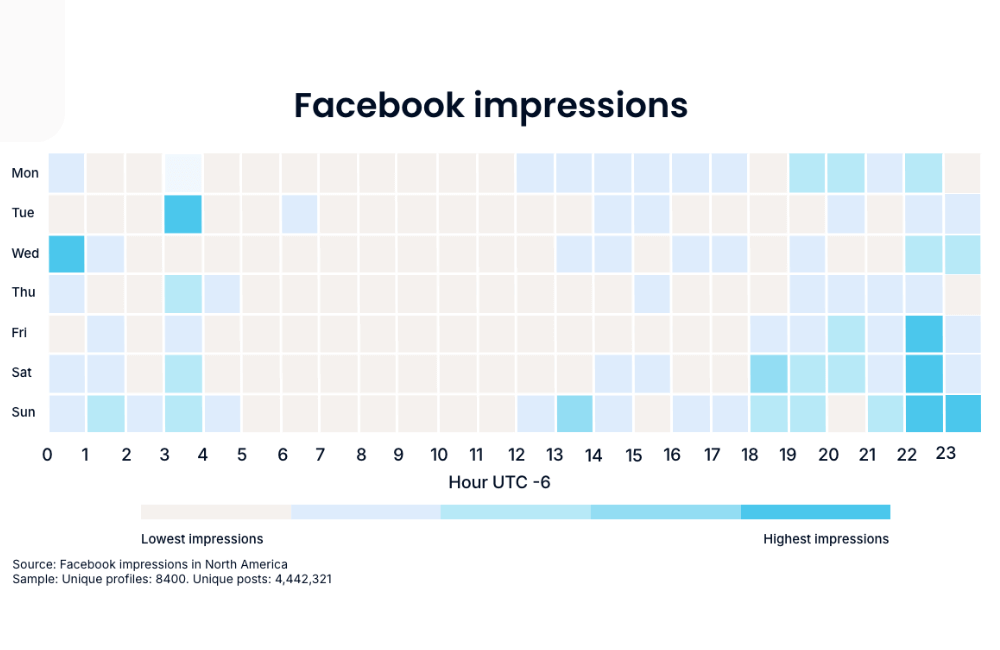
Facebook Impressions stable in 2026? What is the cost per 1,000 ad impressions?
To help you visualize easily, we use an actual campaign that the team has deployed. In this campaign, we spent approximately 20,000 USD of the advertising budget. With that spending level, the ads reached 146,000 users. This means that 146,000 different people saw our advertisement at least once. However, the total number of times the ads were displayed reached 406,000 impressions. In other words, the same user might see the ad multiple times while browsing Facebook or Instagram. In summary:
- Reach is 146,000 people.
- Impressions are 406,000 views.
This is completely normal in Facebook advertising, especially for sales or remarketing campaigns.
What is CPM? How does Facebook calculate CPM?
CPM stands for Cost Per Mille, which means the cost for every 1,000 ad impressions. An important point that many new advertisers often confuse is:
- CPM is not the cost for 1,000 people
- CPM is not the cost for 1,000 potential customers
- CPM is simply the cost for the ad to be displayed 1,000 times, regardless of who it is shown to or how many times it appears to the same user
Understanding CPM correctly will help you avoid confusion when seeing low reach but high impressions, or vice versa.
Why do Facebook ad CPMs have different price levels?
Many advertisers wonder: “Why do some businesses only pay 10 USD CPM, while we have to pay 20 USD or even higher?” In fact, CPM is not random. It is governed by the three main factors below.
Ad Relevance
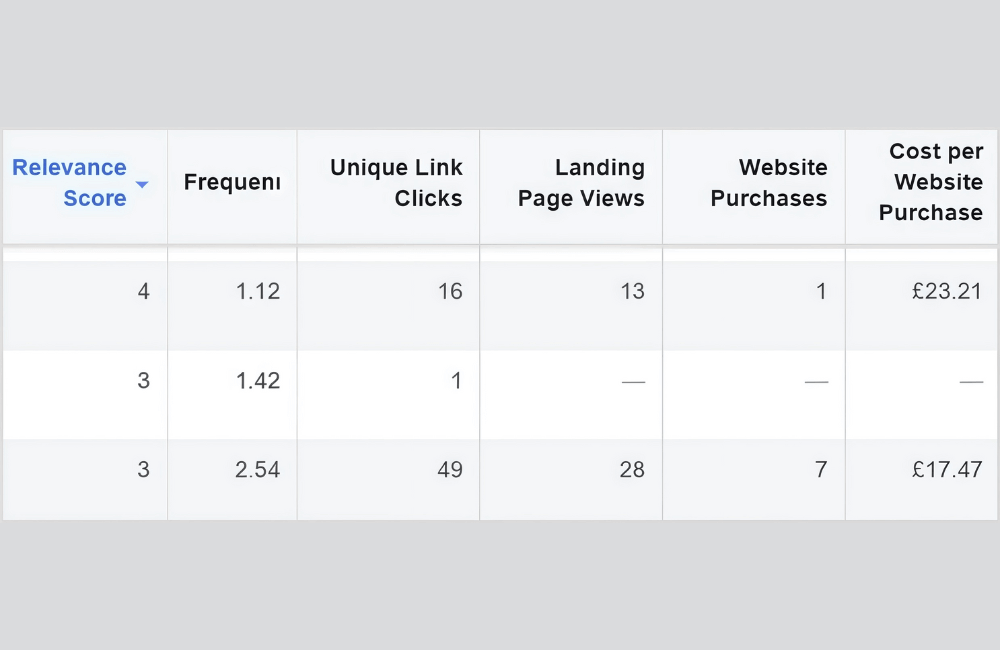
Facebook prioritizes ads that users are truly interested in and interact with. The types of interaction that Meta evaluates include:
- Clicking on the ad
- Watching videos
- Sharing posts
- Performing conversions such as filling out forms or making a purchase
Ads with good quality and content that matches viewer insights will be distributed by Facebook at a lower cost. Conversely, unattractive ads with little interaction will have a higher CPM. Simply put, Facebook is “telling” us: If users like your ad, we will display it cheaper.
Audience Size
Audience size also directly affects CPM.
- The larger the audience size, the cheaper the CPM usually is
- The smaller and more niche the audience, the higher the CPM
Example:
- Targeting all parents in the US is usually cheaper
- Targeting mothers with newborn twins in a specific ZIP code will be much more expensive
An important note for 2026 is that the Facebook algorithm is now very intelligent. Meta can read ad content, images, and URLs to determine who to distribute to. When you target too narrowly, you are unintentionally limiting the optimization capabilities of the algorithm. In most cases, broad targeting not only helps keep CPM cheaper but also yields better results.
Competition among advertisers
The final factor is the level of competition. The more advertisers targeting the same audience group, the higher the advertising price. A typical example is the strategy of targeting users by birth month to give birthday gifts and collect emails. Because too many businesses are doing the same, this audience group has high competition, and CPM is often expensive. This shows that Facebook advertising costs are always governed by:
- Ad relevance
- Audience size
- Market competition
Understanding these three factors will help advertisers proactively control CPM and optimize Facebook advertising effectiveness in 2026.
Optimize Budget with facebook ads cost per 1000 impressions Tips
To optimize CPM in the post-Andromeda Meta era, we have noticed a factor often overlooked by advertisers that serves as an important guideline in Facebook advertising 2026: the ad format. Many of you think that to reduce CPM, you simply need to “decrease the budget,” but in reality, a more effective approach is to change or add new creatives based on the same core message.
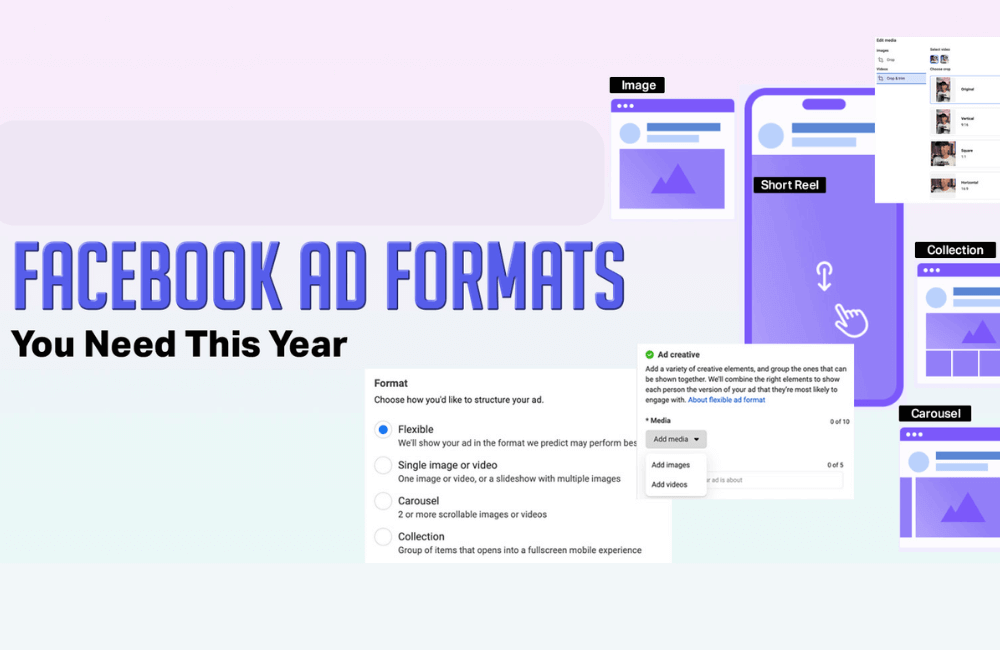
When we mention “format,” many advertisers often ask:
- Is the format UGC or a talking head video?
- Is it an image ad or a video ad?
That understanding is not wrong, but it is not enough. In the context of CPM optimization, format is not just the display form, but the way you convey the same concept, the same perspective, the same persona, and the same level of customer awareness, but under many different versions. In other words, you do not need to constantly think of new concepts, but rather transform old concepts into various formats so that Meta’s algorithm has more delivery options.
One concept, multiple different formats to reduce CPM
Suppose we have only one unique concept, for example, the issue of “forehead itching when wearing a hat.” With this concept, advertisers can fully deploy many different formats, such as:
- “No more forehead itching after switching to this type of hat.”
- “Get rid of the hat that makes your forehead itch immediately.”
- “Never suffer from an itchy forehead again.”
All speak about the same pain point, but are expressed with different words and different images. We can:
- Use 3 different photos of the same woman.
- Change the background but keep the character the same.
- Keep the character the same, but change the hat type.
- Still talking about an itchy forehead, but changing the shooting context.
The message remains unchanged, but the format is continuously refreshed. This is the key point that helps lower the CPM.
Combine persona, pain point, and awareness level
In actual implementation, we often combine:
- Different personas, for example, male and female
- Ads focusing on pain points (problem-aware)
- Ads focusing on solutions or products (product-aware)
- One version emphasizes social proof, while another emphasizes the discomfort of the problem.
Although it appears to be many different concepts on the surface, the essence still revolves around one core customer desire. Diversifying formats helps Meta test faster and find the version with the best CPM.
Build a “format library” for long-term reuse
In actual campaigns, we do not create each ad separately. Instead, the team builds an internal format library, including:
- Formats created by ourselves
- Formats are synthesized from swap files and effective ads in the market.
Usually, we only need to take a screenshot of a high-performing ad, upload it to the Nano Banana tool, and request:
- Keep the same layout.
- Change the character to a woman.
- Keep the hat style, but change the color.
- Change text to “no more itching.”
In just a few minutes, that format is ready to be used for another product, another customer, or another persona, without having to rethink from the beginning.
From practical experience, we can confirm: One of the most effective ways to reduce CPM on Facebook in the post-Andromeda Meta era is to increase creative diversity and expand the number of formats within the ad account.
Optimizing the cost per 1,000 impressions for Facebook ads is not about increasing the budget, but about how advertisers build and diversify creatives intelligently. When you clearly understand the core concepts, deploy many different formats, and give Meta enough data to learn, CPM will gradually stabilize, and the advertising budget will be used more effectively in the long run.
Frequently asked questions
Not necessarily. Instead of creating new concepts continuously, we recommend keeping effective concepts and expanding into various different formats to optimize distribution.
There is no fixed number, but for each concept, advertisers should have at least 3–5 different creative formats so that Meta’s algorithm has enough options and can learn faster.
💬 Contact now for free consultation from BHW!
- Website: https://vi.blackhatworld.io/
- Telegram: @bhw_agency
- Whatsapp: +84819001811
- Wechat: bhwagency
- Email: [email protected]
This article is also available in other languages: