How to Run Meta Ads for Gambling: The 5-Step Guide to Policy Approval (2026)
In the context of Meta increasingly tightening regulations on high-risk industries, running casino ads or gambling-related content has become a major challenge for most advertisers. However, it is not “impossible.” If you clearly understand the process, meet the correct technical requirements, and fully prepare documentation according to Meta’s policies, you can be legally approved and safely deploy campaigns. In this article, BlackHatWorld will go through a standardized 5-step guide, helping businesses or operating units know how to request approval for gambling ads on Meta according to the 2026 standard faster, more lawfully, and with reduced rejection risk.
Latest updates from Meta on Gambling Ads in 2026
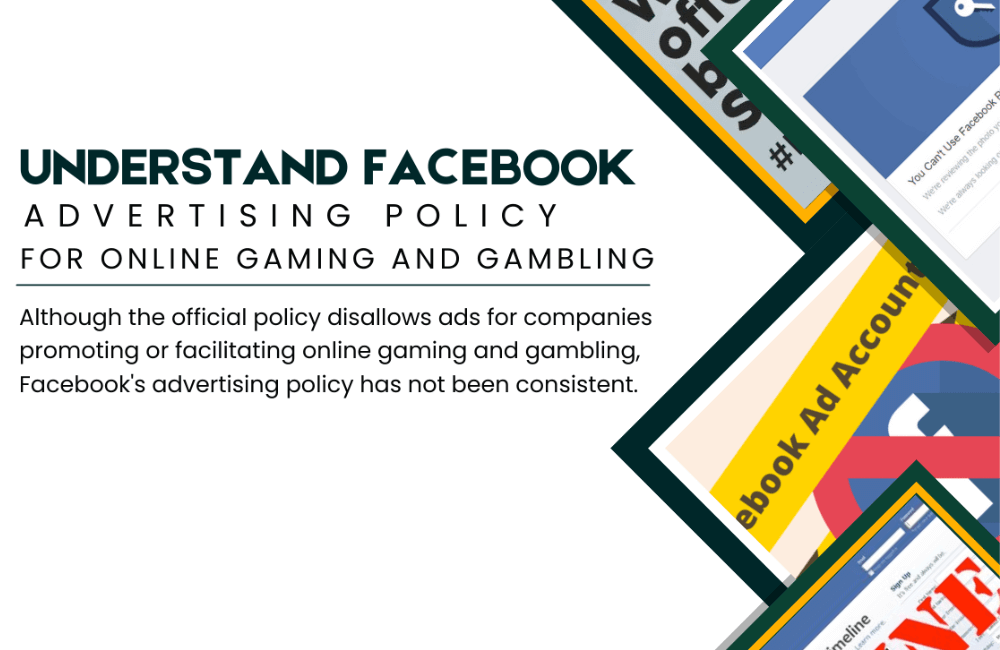
To help advertisers in the fields of gaming, betting, and entertainment apps with elements of chance better understand the new legal landscape, we will summarize the detailed key changes in Meta’s gambling advertising policy for 2026. Understanding these updates will not only help your campaign get approved faster but also minimize the risk of account disablement, ad suspension, or distribution restrictions.
In 2026, Meta adjusted and further tightened several requirements related to prize gambling ads, real-money games, online casinos, and related services. Some key points you need to grasp:
Mandatory valid license according to the target region
Meta requires all advertisers to provide a legal operating license in the exact country or region where you intend to run ads. For example, if you plan to target users in Canada, you must have a license issued by the Canadian gambling regulatory body, instead of only using an offshore license or one from another country like Curacao.
Enhanced advertiser verification
All ad accounts must undergo an additional verification step, including:
- Verification of business or personal identity
- Providing documents proving the right to operate the service
- Business manager accounts with high trust and a clean history
For example, a newly created BM of just a few days is almost certainly rejected; conversely, a long-standing BM with a stable spending history will be easier to approve.
Stricter content regulations
Meta requires that gambling-related ads must:
- Must not use overly stimulating images such as “jackpot explosions,” “big wins,” “win 10 million immediately”…
- Must not create a feeling of guaranteed wins or quick success
- Must not target people under 18 years old
For example, ads like “play 5 minutes, get cash immediately” will be rejected immediately because they violate the element of profit commitment.
Restrictions on targeting and user files
Meta will automatically narrow your distribution file, removing high-risk groups such as:
- Users showing signs of being minors
- Users falling into the “sensitive” category
- Users who have previously reported related content
This makes reaching the right customers more difficult, requiring you to optimize content and allocate distribution costs more intelligently.
Mandatory display of warning information
Ads must include a transparent message about risks, such as:
- “Play responsibly”
- “For 18 years and older.”
- “Service may cause financial risk.”
For example, when running live casino game ads, you need to add a warning line directly on the video or image to avoid being assessed as lacking transparency by Meta.
The difference in Meta’s policies when applied to the Gambling Ads category
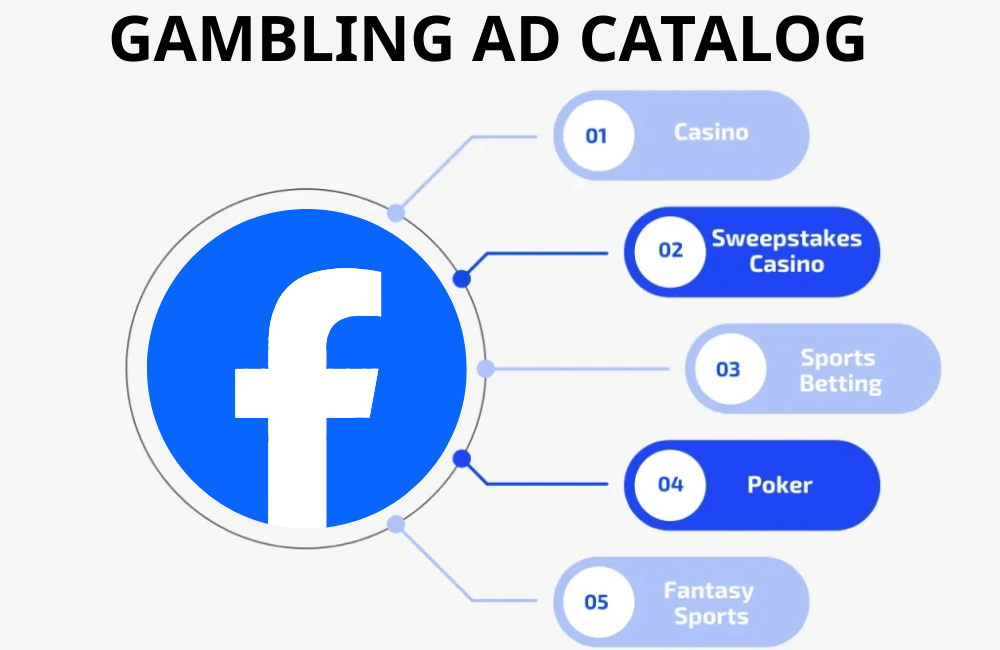
When working with businesses related to gambling or games of chance, we noticed that most of the difficulty lies not in ad running techniques, but in correctly understanding Meta’s policy. Meta does not treat all gambling activities equally; each category has different legal requirements and approval standards. Clearly understanding this classification will help you avoid ad rejections, account restrictions, or even permanent bans. Below, we will analyze each type in detail so advertisers can flexibly apply them in their campaigns.
Real-Money Gambling
For Meta, ads related to real-money gambling are the most strictly regulated category. If you are running ads for online casinos, sports betting, or real-money poker, Meta requires:
- Legal operating license in the target country
- Authorization approval from Meta before running ads
- Proof that users risk real money in exchange for real winnings
For example, A sports betting site wanting to advertise in Vietnam but only possessing a license in Malta will be immediately rejected by Meta. Meta requires a valid license in the exact country where you want to run ads.
Social casino games
Previously, many of you thought that “entertainment slot” games and “virtual fish-shooting rewards” were not regulated by Meta. However, currently, Meta has significantly tightened its grip. If the game has any elements of real-world value, such as:
- Virtual currency that can be bought, sold, and exchanged
- In-game items that can be converted into cash
- Tokens, coins, reward points that have “value.”
Then Meta will view that game as a form of gambling with monetary risk and require authorization just like real-money gambling. An “entertainment-only” slot game where players can sell coins to others, → Meta considers it gambling.
Fantasy sports
Fantasy sports are separated by Meta into a distinct category, as they involve both a skill element and a risk element. Depending on the prize structure, Meta applies different requirements:
- If players pay a participation fee and receive prizes with cash value, this is considered a form of conditional gambling.
- If the prizes are purely honorary or non-exchangeable items, Meta may apply a lighter classification.
Example: The free fantasy Premier League is generally not considered gambling. But an app that charges a participation fee – awards cash → requires Meta authorization.
Sweepstakes and contests
Even if you run a simple giveaway, Meta still scrutinizes the prizes closely if they:
- Has monetary value, or
- It is a virtual item, but it has a trading market
This means that many forms of mini-games, sweepstakes, and prize claims for “cashable virtual items” are categorized under those requiring compliance with gambling policies. A contest like “spinning a wheel to receive a resalable game gift code” → Meta considers it an activity with gambling elements. Therefore, while creating interactive game ad content on Facebook for customer engagement, you need to be aware of Meta’s advertising policy.
How to Run Meta Ads for Gambling: The 5-Step Guide to Policy Approval (2026)
In 2026, advertisers in the field of betting apps, fantasy gaming, or gaming, betting hybrid face increasingly strict Meta policies. If run incorrectly, the ad account, fanpage, or even WhatsApp can be immediately banned. Therefore, we want to help you clearly understand the correct procedure so you can still create ads and receive WhatsApp leads consistently every day without violating the policy. Below is a detailed guide following 5 optimal steps, easy to apply immediate
Step 1: Create a campaign in Ads Manager
Open Ads Manager and click on the Create button. Select the Engagement objective because we need to run ads directed to WhatsApp leads. If you want to optimize for WhatsApp Leads, then Engagement is the mandatory choice.
After selecting, click Continue. Meta will create a default campaign named Manual Engagement Campaign. Click Continue again to proceed to the next step. In the Campaign section, we only need to name it as desired, with no further adjustments needed. The budget will be set up at the Ad Set level. Then click Next.
Step 2: Set up the Ad Set and select the Conversion Location
In the Ad Set, the most important part is the Conversion Location. Meta allows sending users directly to WhatsApp through the Message Destination option. However, we advise you absolutely not to use this method when advertising involves gambling. If directed straight to WhatsApp, the risk of account banning is extremely high. Because gambling ads violate Meta policies, the risks include:
- Ad account disabled
- Fanpage removed
- WhatsApp permanently banned
To ensure safety, you must choose the Website instead of the message destination. This is the secret to bypassing the landing page first and then redirecting users to WhatsApp. After choosing a Website, proceed to select any Pixel. In the Conversion Event section, choose Subscribe.
Step 3: Use a landing page to avoid direct violations
This is the part that determines whether the ad is approved or not. Professional advertisers in the industry, like us, all use a landing page as an intermediate step. For example, you can use a landing page in the style of fantasy applications like Ferar Play. Requirements for a valid landing page:
Smooth, professional interface, does not contain betting keywords, Absolutely do not use the words betting, gambling, or online betting. Only use general phrases such as:
- 24/7 Instant Access
- Register Now
- Play with Friends
When users click Register Now, you can redirect them to WhatsApp or to the registration ID, depending on the campaign goal.
Step 4: Setting up a safe Budget, Targeting, and Placement.
Regarding the budget, when you first start running, you should only set 250 rupees for safe system optimization.
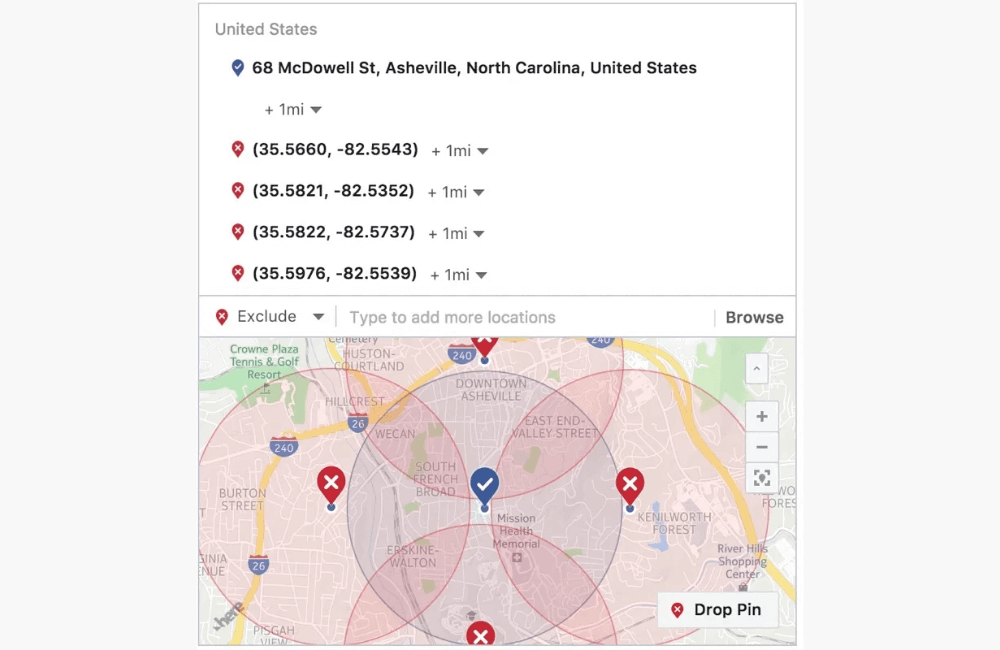
When you select a Location in any country, you need to remember to exclude states that prohibit betting. Here, we use India as an example:
- Tamil Nadu
- Assam
- Nagaland
- Sikkim
- Jammu and Kashmir
If you do not exclude the correct locations, the ad is almost certainly going to be rejected. For those new to this industry, start with simple targeting:
- Interests: Job, Job Career, Job Hunting
- Students
- Age: 25 to 42
Once the campaign is stable, you can expand the targeting later. Select manual placement and only run on Instagram:
- Instagram Feed
- Instagram Story
Do not run on Facebook because Facebook has very strong sweeps for the gambling industry. Instagram still has risks, but they are much lower.
Step 5: Creating policy-compliant Ad Creative
When running WhatsApp leads for platforms like Rummy, Dream11, Vision11, etc., you are only allowed to use images, not videos. The images must be:
- Simple and clean
- Does not contain betting suggestive content
- Bears a mild illustrative nature, similar to a Fantasy poster
When writing the Primary Text and Headline, you can ask ChatGPT for assistance with neutral and non-violating content.
Complete everything, re-check the configuration, and then click publish. If the procedure is followed correctly, the ad will be approved in just a few minutes. From there, you can receive between 20 and 50 WhatsApp Leads every day without fear of being banned.
Running gambling ads on Meta in 2026 is no longer simply about campaign optimization, but a process of strict policy compliance and building transparency from the outset. When advertisers clearly understand the regulations, fully prepare licenses, and deploy appropriate content, the opportunities for approval and campaign scaling will be much higher. View policy compliance as the foundation for building sustainable growth, rather than a barrier. We believe that with the right process, every campaign can operate safely and effectively.
Frequently asked questions
No. Meta requires all ads related to real-money gambling to have a valid license and a letter of authorization. If missing, the campaign will be immediately rejected, potentially even affecting your ad account quality.
Yes, in cases where virtual currency or in-game items can be converted into real value or traded on a secondary market. Meta considers this a form related to monetary value, so mandatory pre-approval is still required before running ads.
💬 Contact now for free consultation from BHW!
- Website: https://vi.blackhatworld.io/
- Telegram: @bhw_agency
- Whatsapp: +84819001811
- Wechat: bhwagency
- Email: [email protected]
This article is also available in other languages: