The 5 Growth Models: Can Facebook Ads Grow My Business in Your Industry?
Have you ever wondered if advertising on Facebook truly helps your business grow in the current industry?
You are spending around 5,000 dollars each month on Facebook ads, seeing a steady increase in traffic, yet your profit margin is dropping faster than your patience. The dashboard shows all the metrics, but somehow, everything still fails to generate sustainable growth.
The fact is that many advertisers and e-commerce business owners have not fully leveraged the growth potential of Facebook Ads. When properly optimized, Facebook advertising can reach an average conversion rate of 8.95 percent and a cost per click of only about 1.72 USD (based on 2025 data). The secret lies in targeting the right audience, creating engaging content, and continuously optimizing through Meta’s native tools combined with advanced analytics platforms.
In this article, BlackHatWorld will guide you through five powerful growth models used by leading e-commerce brands to increase revenue and scale sustainably through Facebook advertising.
Can advertising on Facebook help our business grow in your industry?
When we talk about growth marketing with Facebook advertising, it is not simply about generating more visits or increasing the number of followers. This is the process of building a sustainable outreach system that helps your business attract truly valuable customers and deliver long-term profitability. Imagine that instead of throwing spaghetti at the wall to see what sticks, you are following a proven formula. Real data validate this smart and effective advertising strategy.
What does growth marketing with Facebook advertising actually mean?
For us, growth marketing in Facebook advertising is the combination of data-driven testing and smart scaling systems that help businesses achieve stable and sustainable growth.
For example, instead of focusing only on clicks or short-term conversions, we aim for customers who deliver long-term value to the brand. A perfume advertising campaign, for instance, is not only about selling a bottle of perfume, but also about building loyalty and brand emotion, where customers feel connected and return to purchase many times.
Essential Account Structure for Growth Marketing
To achieve that, your Facebook advertising account structure needs to be built strategically and reflect your customer journey. We recommend that advertisers divide campaigns into clear groups to easily optimize objectives at each stage:
- Awareness Campaign: Target “cold” audiences, those who do not know your brand yet. For example, a short video introducing your product or brand story will help create an initial impression.
- Consideration Campaign: Designed for “warm” audiences, those who have interacted but have not purchased. This is when you can run ads presenting offers, customer reviews, or A B testing different content formats.
- Conversion Campaign: Target “hot” audiences, those ready to buy. For example, running an ad such as “Buy now and get twenty percent off in twenty four hours” can help increase the closing rate quickly.
- Retention Campaign: This is the step many businesses overlook. Continue nurturing existing customers with personalized ads such as “Special offer for loyal customers” or “New fragrance launch just for you”.
With this structure, you will easily allocate budgets effectively, optimize the performance of each stage, and especially control the entire customer journey clearly and strategically.
Specific conversion rates by industry on Facebook
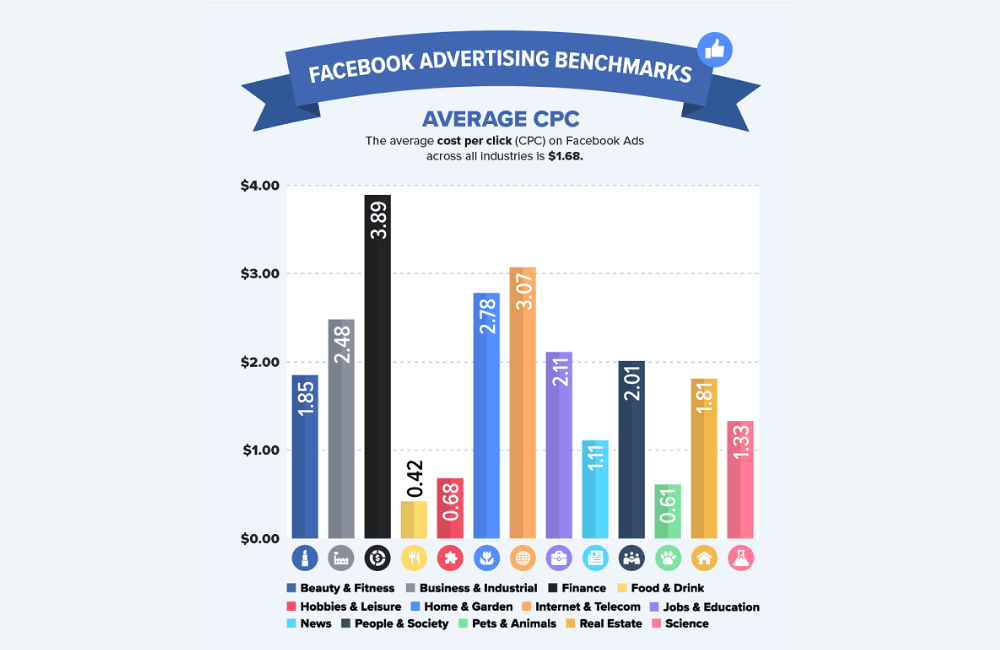
Not all industries deliver the same advertising performance on Facebook. Each sector has different customer characteristics, buying journeys, and interaction behaviors, so the conversion rate also varies significantly. Below is the average conversion rate based on updated 2025 data, helping advertisers and businesses gain a more realistic view when evaluating the effectiveness of their campaigns:
- Pet supplies: 2.72 percent
- Home and garden: 0.70 percent
- Health and beauty: 2.48 percent
- Clothing and accessories: 1.23 percent
- Food and beverages: 3.26 percent
- Sports and recreation: 0.71 percent
- Arts and entertainment: 0.80 percent
As you can see, the e-commerce industry in general is below the average level, but that does not mean that Facebook advertising is not effective. In fact, this is an opportunity for us to build a smarter approach strategy, such as optimizing target audiences, testing creative content, and improving the post-click experience.
For example, a cosmetic brand can increase the conversion rate by using short videos that review real products, combined with automatic remarketing for users who added items to the cart but did not purchase. Meanwhile, food and beverage brands can take advantage of limited-time promotions to encourage faster purchase actions.
Industry Cost Standards
To build a reasonable budget strategy, understanding the benchmark cost in each industry is extremely important. It helps advertisers determine the optimal spend for each potential customer (CPL) or each click (CPC), allowing them to allocate budgets in the most effective way. According to data in 2025, the average cost by industry is recorded as follows:
- Real estate: 13.87 USD for each potential customer
- Home improvement: 24.29 USD for each potential customer
- Legal: $154.58 per lead
- The average cost for each click (CPC) across industries is 21.98 USD.
These figures may vary depending on the market, audience, and advertising strategies that you deploy. For example, a real estate company targeting customers in major central city areas such as Ho Chi Minh City may have higher costs but achieve higher quality conversion rates.
The 5 Growth Models: Can Facebook Ads Grow My Business in Your Industry?
In the journey of Facebook ad optimization, we advise you, especially advertisers and brand owners, to think of campaign structure as a customer journey rather than arranging it according to your internal business structure. Below are five practical growth models, along with specific guidelines for applying them to your campaigns, accompanied by illustrative examples for better visualization.
Campaign architecture based on the funnel stage
Instead of grouping all campaigns into the same ad, break them down according to each stage in the sales funnel. This approach helps us optimize specific goals for each stage and clearly allocate the budget, thereby increasing overall performance.
Top-of-Funnel awareness campaign
The goal of this stage is to generate awareness and reach a broad audience. You should aim for broad targeting, using an audience file based on interests and lookalike audiences from 3 to 10 percent. Content at this stage is educational and involves brand storytelling. For instance, a perfume brand might run a video telling an inspirational story about the scent’s origin to pique viewers’ curiosity. Optimize for reach, impressions, or video views. We typically allocate 20 to 30 percent of the total budget to this stage to ensure the upper funnel has enough “input” for the subsequent steps.
Middle of Funnel consideration campaigns
In the middle of the funnel, the goal is to drive customers into deeper engagement, such as visiting the page or viewing product details. The audience at this stage often includes people who have visited the website, previously watched a video, or engaged with a post. Suitable content is product demonstrations, social proof, and benefit comparisons. Optimize for link clicks, landing page views, or engagement. For example, an online clothing store can use a carousel ad showing outfit combinations with the products to increase landing page visits. We recommend allocating 30 to 40 percent of the budget for this stage.
Bottom of Funnel Conversion campaigns
The final stage aims directly at sales conversion. The audience includes cart abandoners, previous purchasers, or high-intent customers. The content needs to focus on products, offers, and urgency factors like a limited-time discount. Optimize for purchase conversion, ROAS, or target CPA. A practical example is when a customer abandons a cart within 24 hours, you can run an ad with a 10 percent discount code along with the product image and a clear call to action. We typically allocate 40 to 50 percent of the budget for this stage to ensure a good closing rate.
Facebook Reels is your new best friend.
Reels has become an indispensable tool for e-commerce due to its authentic, native format and prioritization on both Facebook and Instagram. We encourage you to use Facebook Reels ad campaigns to showcase products, show before-and-after results, production behind-the-scenes, or UGC featuring real customers. For example, a cosmetics brand can use a 15-second reel to show the before-and-after of using a serum, accompanied by a short caption and a CTA leading to the landing page. The golden rule is to keep reels authentic and useful, thinking along the lines of “content that happens when a product feature is used” rather than being an overt advertisement.
Best practices for vertical video
Vertical videos with a 9:16 ratio often have a higher conversion efficiency because they align with mobile usage habits. To leverage this, you need to:
- Hook the viewers in the first 3 seconds with motion, strong text, or engaging visuals.
- Keep the key information within the central 80 percent safe zone of the frame to avoid cropping on devices.
- Add captions or text overlays because many viewers do not turn on the sound.
- Include a clear call to action that remains effective even without sound.
For example, a household goods store can start the video with a shot of the product in action, followed by a text overlay stating the benefits, and finally a buy now button.
User-generated content (UGC) strategy
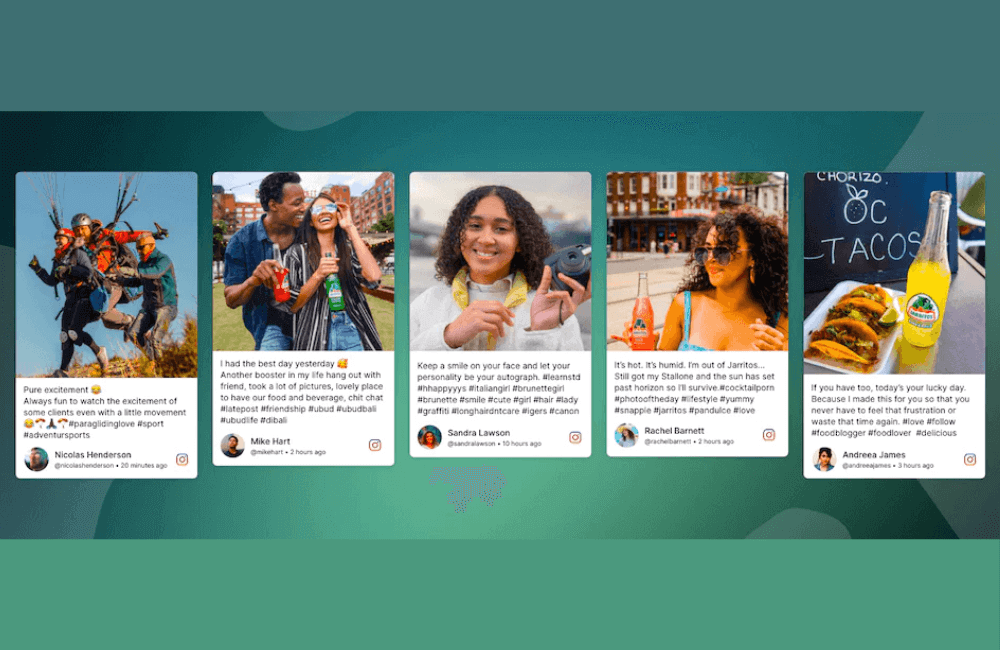
UGC always has a strong impact due to its authenticity and social proof. However, to have a stable source of UGC, you need to systematize the collection process:
- Send a post-purchase email requesting a review along with an image or video upload form.
- Organize a contest on social media, calling for customers to share their experience to receive gifts.
- Use a hashtag campaign for easy tracking and content reuse.
- Offer discount codes to customers in exchange for content creation.
For example, a perfume shop could offer a 10 percent code to customers who post a reel trying the scent and tag the brand.
Creative testing framework
Creative testing must be systematic, not random. The testing framework we apply is as follows:
- Test one variable at a time, such as headline, image, or CTA. For example, compare a lifestyle image with a product photo to see which one drives a higher CTR.
- Run the test with a minimum statistical significance threshold, for example, each variable needs at least 1,000 impressions to make a reliable conclusion.
- Document the winning elements in detail for reuse in future campaigns.
- Scale up the winning ads to other customer segments and other campaigns.
- Refresh winning ads before performance declines by changing the image, copy, or CTA.
For example, when a hair care ad video performs well, we will test changing the thumbnail, adding a different caption, and testing video duration to maintain performance when scaling the budget.
Applying the 5 growth models on Facebook not only helps our businesses or yours reach customers more effectively but also optimizes costs and increases sustainable revenue. When campaigns are built based on the customer journey, combining creative content and continuous testing, Facebook will become a powerful tool for scaling business in any industry.
Frequently asked questions
Yes. Facebook offers various ad formats that allow businesses, from small to large, to customize goals, budget, and approach suitable for their market.
Typically, businesses can see positive signals after 2–4 weeks if the campaign is optimized correctly, but sustainable effectiveness will be clearer after 2–3 months when data and the customer file are systemized.
💬 Contact now for free consultation from BHW!
- Website: https://vi.blackhatworld.io/
- Telegram: @bhw_agency
- Whatsapp: +84819001811
- Wechat: bhwagency
- Email: [email protected]
This article is also available in other languages: