The Ultimate Guide to Copywriting for Facebook Ads That Actually Convert in 2025
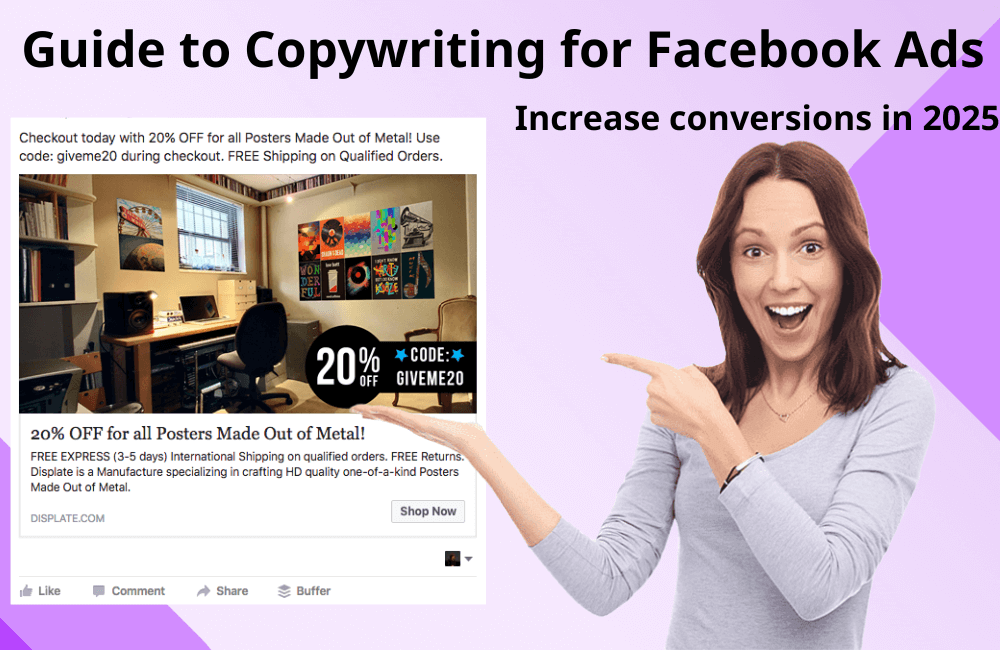
Are you curious about the formula we applied to generate over $50 million in revenue from Facebook ads for our clients? It may sound bold, but it is a real-world result after 6 months of continuously testing thousands of different ad creatives. In this article, BlackHatWorld will share the formula for writing the highest-converting Facebook ads. These secrets are little-known but can be applied across all ad formats to help you achieve a breakthrough in every ad campaign. Let’s discover them now!
Understanding the 5 Levels of Customer Awareness by Eugene Schwartz
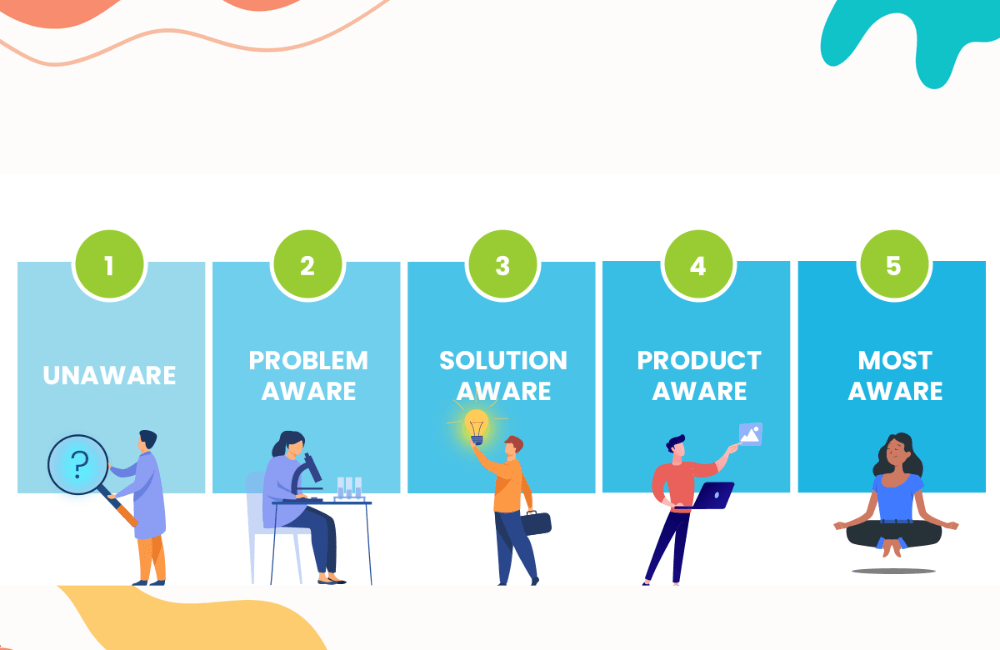
Understanding the levels of customer awareness is key for advertisers to create content and messages that align with each stage in the customer journey. Below are the 5 levels of awareness described by Eugene Schwartz (author of “Breakthrough Advertising”), along with specific examples to help you easily apply them in practice.
Completely Unaware Customers
At this stage, customers do not yet know they have a problem and are unaware of you or your product. Therefore, if you try to sell immediately, the ad will almost certainly fail. Instead, we need to capture attention with a strong hook, and then educate them and build empathy.
Example: We once created a video with the title: “7 lessons I learned while building a 7-figure business.” The content said nothing about the product but simply evoked the thought: “If this person can do it, maybe I can start a business too.” This approach helps awaken the latent need of the viewer.
Customer Problem Awareness
At this stage, the audience knows they have a problem but is unsure of the best solution. Our role is to position the idea or the direction of the solution, rather than selling the product immediately.
Example: If a user is wondering, “How can I earn money online without large capital?”, we can introduce copywriting as a potential path. Simultaneously, reinforce the belief that “you do not need to be a marketing expert to start.”
Customer Solution Awareness
At this level, the audience already knows about the solution. For example, they understand that learning copywriting can help them make money online, but they do not know who to choose to learn from. Your task now is to build trust by demonstrating capability, sharing genuine value, or offering a low-cost mini-course so they have a chance to “experience” you.
Example: We once ran an ad inviting viewers to join the “5-Day First Ad Copywriting Challenge” for only 4$. After taking the course, 40% of the students continued to register for the in-depth course because they had confidence in the quality of the teaching.
Customer Product Awareness
The audience already knows who you are and what you are selling, but they are not ready to buy yet. At this stage, it is crucial to reinforce the belief that you can actually help them achieve results.
Effective Approach: Use social proof, such as videos of students sharing real results, screenshots of revenue, or testimonials from industry experts.
Example: A student’s video saying, “I earned my first 4000$ after applying the ad copywriting formula from this course” is many times more convincing than any product description.
Highly aware customers.
This is a hot audience; they are ready to buy and need a reason to act right now. At this level, we need to create urgency or a limited-time offer to help them make a quick decision.
Example: A message like “Course registration is open for only 7 days, then you’ll have to wait a year for the next batch” or “30% off for the first 50 people” often causes a surge in conversion rates.
The Ultimate Guide to Copywriting for Facebook Ads That Actually Convert in 2025
In 2025, writing truly converting Facebook ads is not just about words or visuals but about how we understand user behavior and steer their emotions in the right direction. Below is a detailed, step-by-step guide that BlackHatWorld has applied, helping many advertisers achieve conversion rates 3–5 times higher than the average.
Scroll-Stopping Hook
You only have 0.8 seconds to make a user stop among a flood of content on Facebook. Therefore, your first sentence is the critical “gold spot.” The secret lies in creating a literal pattern interrupt, a statement that makes the reader curious and forces them to pause. For example:
- “Want to lose weight?” is too boring and general.
- “My nutritionist told me to stop eating this one fruit, and I lost 11kg in 31 days.”
The second sentence surprises the reader, creates a sense of counter-logic, and sparks curiosity, the key element for them to continue reading.
Pattern Interrupt
This is a technique that helps viewers stop habitual thinking and start paying attention to you. You can apply it by:
- Using surprising statistics: “We tested 1,374 Facebook ad creatives.”
- Using a statement that causes cognitive conflict: “The harder you exercise, the fatter you get.”
- Challenging common beliefs: “Most Facebook ads experts are wrong about this.”
This technique is inspired by the book Breakthrough Advertising by Eugene Schwartz, one of the classic texts on the art of high-conversion copywriting.
Problem Amplifier
Many advertisers stop at merely stating the problem without knowing how to amplify it. For example:
- “Are you struggling to lose weight?”
- “Every diet you’ve ever tried has failed, and that’s not your fault.”
The second sentence not only states the problem but also empathizes with the reader. When customers feel that you understand them, they will trust you and continue reading your content.
Unique Mechanism
This is the factor that makes your product or service memorable and distinct from competitors. Instead of saying: “Proprietary formula,” specify it like:
- “Rare Swiss enzyme that burns fat 3 times faster.”
- “AI profit scanner – an automatic profit scanning tool for Facebook ads.”
A clear, unique mechanism helps increase credibility and creates a strong impression on consumers.
Story Bridge
Effective advertising always tells a parallel story, connecting the problem and the solution naturally and compellingly.
Example: If you are advertising a weight loss product, do not just tell the story about weight loss. Say: “I discovered this weight loss secret while I was trying to learn to play the bass guitar.”
The surprise factor makes the reader curious, creates a desire to discover more, and increases the time spent interacting with your content.
Social Proof Accelerator
Instead of just providing a short testimonial, build a chain of evidence over time to show the customer’s real change. For example:
- Day 1: “I started sleeping better.”
- Week 1: “I lost the first 5kg.”
- Month 3: “I had to buy a whole new wardrobe.”
Proof that develops over time makes the story much more authentic and convincing.
Solution Stack
This is how you make the price “irrelevant” by increasing the perceived value of the product. Instead of simply saying, “The price is 100$,” you can present it as:
- “15 in-depth instructional videos.”
- “A bundle of ad tools valued at 120$”
- “30 days of 1-on-1 support with an expert.”
When readers feel that the value they receive is higher than the cost they pay, the conversion potential will increase sharply.
Risk Reversal
A money-back guarantee is good, but not enough to eliminate doubt. Offer a commitment that exceeds expectations, but remember to avoid using banned words on Facebook to minimize campaign risk.
Example: “Try the XYZ Accelerator for 30 days. If you don’t lose at least 3kg while still eating your favorite foods, we will not only refund your money but also give you an extra month of free usage.”
This strategy helps completely remove psychological barriers and increases the purchase rate.
Action Driver
A strong call-to-action (CTA) will determine the final step in the customer journey. An effective approach is to use a two-step method:
- Ask a question that invites agreement: “Are you truly serious about changing your physique?”
- Once the reader agrees mentally, present the call-to-action: “If so, click the button below to start today.”
This writing style significantly increases the click-through rate (CTR) and the conversion rate.
At the current stage, writing Facebook ads that truly convert no longer relies only on intuition or personal experience but on a combination of strategic thinking, understanding customer psychology, and creative storytelling ability. If advertisers persistently test and optimize every detail correctly, their Facebook ad campaigns will not only attract but also genuinely convert into high-quality leads.
Frequently asked questions
You can monitor metrics such as CTR (click-through rate), CPC (cost per click), and conversion rate in Ads Manager. If the CTR is high but the conversion rate is low, it means the ad content is engaging, but the landing page or message is not strong enough to persuade customers to take action.
In our experience, you should do a creative refresh every 2–4 weeks, depending on your spending budget. If the ad starts showing signs of decreased CTR or increased CPC, that is when you need to change the visual elements, headlines, or messaging to maintain the best performance.
💬 Contact now for free consultation from BHW!
- Website: https://vi.blackhatworld.io/
- Telegram: @bhw_agency
- Whatsapp: +84819001811
- Wechat: bhwagency
- Email: [email protected]
This article is also available in other languages: