How to run dropshipping ads on Meta? (Update 2026)
Facebook advertising remains one of the most effective marketing channels for dropshipping businesses. With billions of daily active users and an extremely detailed customer targeting system, Facebook allows sellers to quickly reach the right potential customer groups and drive sales in a short period.
However, not everyone running dropshipping ads achieves good results. Many beginners often face difficulties in choosing suitable products, setting up ad campaigns correctly, or optimizing budgets to bring in profits. Without a clear strategy, you could spend a lot of money on advertising but still fail to generate orders.
In this article, BlackHatWorld will guide you on how to run dropshipping ads on Meta effectively, from preparing your store and setting up ad campaigns to optimization strategies that help increase conversion rates and scale sales. Whether you are a beginner or have experience in online sales, these steps will help you build sustainable and profitable dropshipping ad campaigns.
Should you advertise Dropshipping on Facebook in 2026?
One of the most important factors why advertisers should use Facebook is its very powerful Machine Learning system. Simply put, Facebook’s advertising algorithm has the ability to automatically find users with the highest likelihood of purchasing your product. This helps sellers avoid excessive guessing about their target audience.
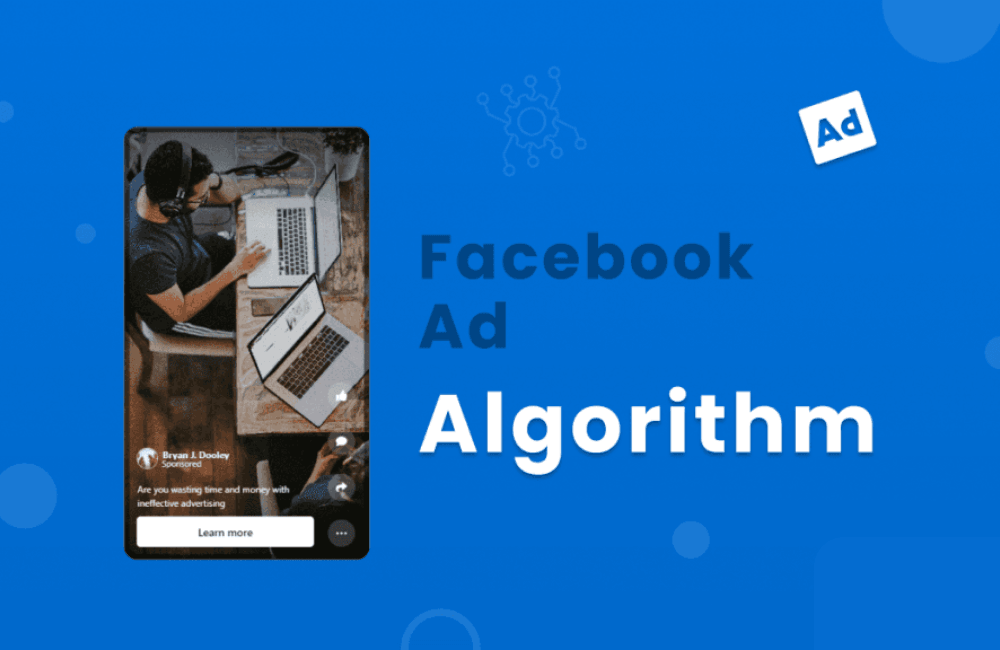
This process usually works as follows. When you start running ads, Facebook will collect data from people who interact with your ads and your website. Examples include people clicking on ads, viewing product pages, or adding products to carts. Then, the system will analyze the common characteristics of these users. Based on that data, Facebook will build an ideal customer profile. This profile is often called the Perfect Customer by advertisers.
Once a suitable customer profile is established, Facebook will continue to distribute your ads to users with similar behaviors and interests. For example, if you sell a gym product like resistance bands, the system may prioritize displaying ads to people who frequently view content about fitness, exercise, or supplements.
A massive user base provides a large market
A huge advantage of Facebook is its extremely large user scale. Every day, billions of people access Facebook, Instagram, and other platforms within the Meta ecosystem. This brings two important benefits to dropshipping sellers.
- First, you can always find new customer segments to target. For example, if you sell pet accessories, Facebook has many users interested in dogs, cats, pet care, or pet-owning communities.
- Second, the large user scale allows your ads to reach an almost unlimited market. When a product sells well, you can scale ads to many different countries or audience groups without worrying about exhausting your customer base.
This is also why many marketing agencies or large e-commerce businesses still use Facebook as their primary advertising channel to scale their business.
Extremely precise targeting capabilities
Facebook is famous for its highly detailed customer targeting system. Advertisers can select audiences based on many factors such as interests, behaviors, age, region, or occupation. This is especially useful for the dropshipping model, because each product usually targets a very specific group of customers.
For example, if you sell a neck pain relief pillow for sleeping, you can target people interested in health, office work, or those who frequently search for sleep support products.
In addition, Facebook allows for testing many different interest groups. Sometimes, a customer group that you do not expect brings the best results. It is this flexible testing capability that helps advertisers find potential customer files more quickly.
How to run dropshipping ads on Facebook?
Many beginners often just create a Dropshipping ad account and launch a simple campaign, then hope for orders. In reality, professional dropshippers always have a clear process from campaign setup, data checking, to optimization and scaling. Below is a detailed step-by-step guide to help you implement Facebook dropshipping ads systematically.
Step 1: Initialize the campaign in Ads Manager
First, we need to access Ads Manager. You can find this tool in the All Tools section, then select Campaigns and open Ads Manager. Once in the ad management interface, click the Create button to start creating a new campaign.
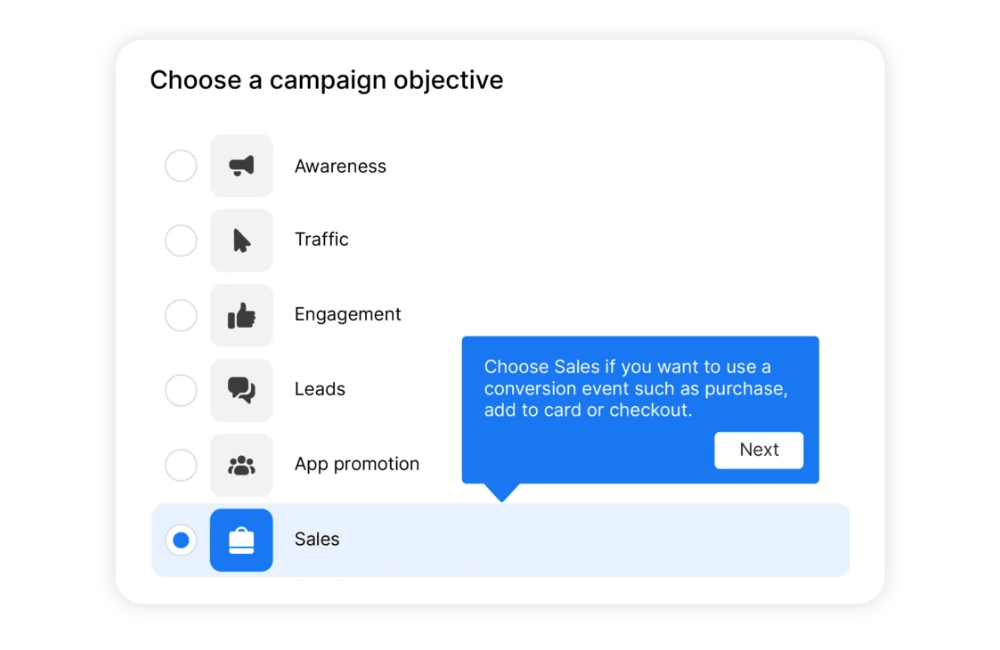
At the campaign objective selection step, Facebook will display many different choices. However, with the dropshipping or e-commerce model, the most important objective is sales. Therefore, we always recommend advertisers choose the Sales objective. After selecting Sales, click Continue to move to the next step.
Name the campaign clearly
Immediately after that, we need to name the campaign. Proper naming helps you manage easily when running multiple campaigns simultaneously. A common naming convention in dropshipping is categorizing by sales funnel stages. For example: TOF stands for Top Of Funnel, which is a campaign to find new customers.
If you sell various products such as necklaces, earrings, and rings, you can name the campaign as follows: TOF Necklaces Prospecting V1. This naming style helps you know at a glance what product the campaign is advertising and which stage of the marketing strategy it is in.
Use Advantage Plus Catalog Ads when necessary
Facebook has a feature called Advantage Plus Catalog Ads. This feature allows the system to automatically select products from a catalog for advertising. However, this feature is only suitable when your store has a large number of products. For example:
- If the store has about 20 products, we recommend disabling this feature.
- If the store has more than 100 products, Advantage Plus Catalog Ads can be very useful.
The reason is that when this feature is enabled, Facebook will pull images directly from the product pages in the catalog instead of using specific creatives like videos or ad images. For example, a large dropshipping store with over 2,000 products can leverage this feature to automatically advertise a high volume of products. In this guide, we will disable that option to better control the ad content.
Setting the advertising budget
In Facebook Ads, there are two main ways to set a budget.
The first way is Campaign Budget Optimization. The budget is set at the campaign level, and Facebook will automatically distribute the money to the ad sets. For example, if a campaign has three ad sets and a total budget of 50 dollars, Facebook might allocate 30 dollars to one ad set and 10 dollars to the remaining two.
The second way is to set the budget at the Adset level. In this case, each ad set will have its own budget. For example, if you have three adsets and each adset has a budget of 15 dollars, the total budget will be 45 dollars. The advantage of this method is that each ad set is tested fairly. Therefore, during the testing phase, many advertisers prefer using the adset-level budget.
In this example, we will set the campaign budget to 50 dollars and choose optimization based on Highest Volume.
Adset setup and targeting
Next is the Adset level. This is where we set up the target audience. A popular way to name an ad set could be: 2026 01 T5 Broad Pack 1. The meaning of each part is as follows:
- 2026 is the advertising year
- 01 is the month
- T5 is the group of the top 5 countries
- Broad means broad targeting
- Pack 1 is the first creative set
Selecting target countries
The most popular countries in dropshipping are often called the Top 5, including:
- United States
- United Kingdom
- Canada
- Australia
- Germany
These markets have high purchasing power and are suitable for many dropshipping products. However, you need to ensure that the supplier can deliver to these countries.
Conversion setup
In the Conversion location section, select Website. The optimization goal should be Maximize conversions with the conversion event being Purchase. This is a very important step. If you optimize for events like Add to cart or Page views, Facebook will bring in many of those actions but not necessarily result in orders.
Setting the advertising schedule
A small tip that many professional advertisers apply is to set the campaign start time for the next day at 12 AM. For example, if you create an ad at 6 PM and the budget is 50 dollars, Facebook might spend all this money in just the remaining few hours of the day. This usually does not yield good results for the machine learning phase.
Broad target audience
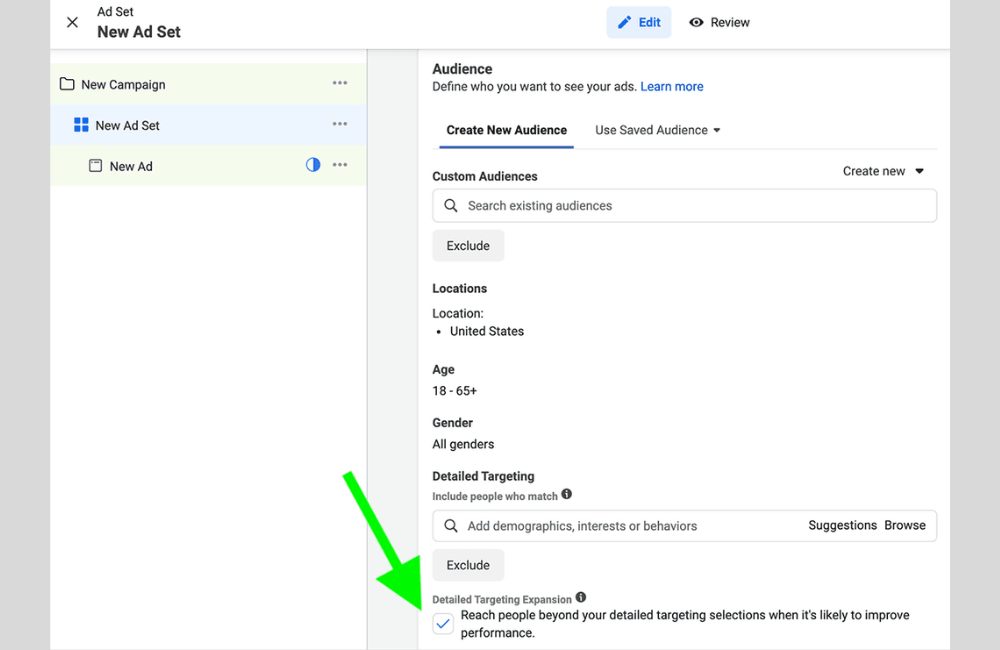
In this example, we use broad targeting. This means:
- All ages
- All genders
- No interest selected
We only target by country. Facebook’s algorithm will automatically find the right customers based on conversion data.
Selecting ad placements
Facebook allows ads to appear in many locations, such as Facebook Feed, Instagram Feed, Reels, and Messenger. We recommend that advertisers use Automatic placements so the system can automatically distribute ads to the most effective positions.
Creating ad content
After completing the adset, we move to the Ads level. This is where you upload ad images or videos. Popular formats include:
- Image
- Video
- Carousel
When naming an ad, you should clearly state the content type. For example:
- Image Female UGC Necklace
- Video Product Demo
Writing ad copy
In the Primary Text section, Facebook allows you to create multiple content versions for testing. For example:
- New Year Sale
- Save up to 50 percent off necklaces
- Free worldwide shipping
- Perfect gift for your loved ones
- Shop now
Another example:
- Valentine Sale
- Over 100000 happy customers
- More than 5000 five star reviews
- Make them feel special this Valentine
Headlines and descriptions
Headlines can be:
- Perfect gift for your loved ones
- Save up to 50 percent off
- Valentine sale now on
Descriptions can be:
- Free worldwide shipping
- 30 day money back guarantee
Set the URL to the correct product page
The ad URL should lead directly to the product page instead of the homepage. Example: store.com/products/necklace. This helps increase conversion rates because customers can make a purchase immediately.
Create multiple ads for testing
In the early stages, advertisers should create about 5 to 10 different ads for Facebook to find the most effective one. You can test various types of content such as:
- Product review videos
- Product demo videos
- Lifestyle images
- UGC reviews
Create a second adset with interest targeting
In addition to the broad adset, you can create another adset using interest targeting. For example, target brands such as:
- Zara
- Starbucks
- Fashion brands
This method is called interest stacking and helps expand the customer base. The ideal audience size is usually from 10 million to 100 million people. After completing the setup, you click Review, then Publish to run the campaign.
Step 2: Customize data columns in Ads Manager
Facebook’s default columns do not display all the necessary data to analyze dropshipping. You should create your own preset with metrics such as:
- Impressions
- CPM
- CTR link
- CPC link
- Add to cart
- Initiate checkout
- Purchases
- Cost per result
- Amount spent
- Purchase value
- ROAS
- Frequency
If running video ads, you should also add metrics like video watch rates of 25 percent, 50 percent, and 75 percent. Then save the preset to use for future campaigns.
Testing phase
During the testing phase, the campaign may not bring in immediate profit. For example, a common timeline:
- Day 1 launch the campaign
- Day 3 start reviewing data
- Day 5 analyze results
Advertisers should monitor key metrics such as CPC, CTR, and add-to-cart rate. For example, if the average order value is 50 dollars, the ideal CPC should be around 1 dollar. If the CPC reaches 2 dollars, the cost for 100 visits will be 200 dollars.
If the profit per unit is 30 dollars, you need at least 7 orders to break even. This requires a 7 percent conversion rate, which is a very difficult figure to achieve. Usually, the conversion rate for dropshipping is only about 2 percent.
User behavior analysis
If the add-to-cart rate is low, you should optimize the product page. Consider:
- Product images
- Customer reviews
- Description information
- Selling price
- Refund policy
Tools like Microsoft Clarity or Propel Replay can help you see where users click, where they stop, and why they do not make a purchase.
Scaling phase
You should only scale up when the campaign is profitable. The most common scaling method is increasing the budget by about 20 to 50 percent every two days and monitoring metrics such as ROAS, cost per result, and conversion rate. Additionally, you should also continuously create new ad content instead of just increasing the budget.
Concept and Variation in testing
When testing ads, most of the time should be spent testing different concepts. For example:
- Models wearing the product
- Studio photos
- Lifestyle photos
- Customer review videos
After finding a winning concept, you can create many different variations such as changing the background color, editing the content, or changing the camera angle.
Facebook advertising remains one of the most effective ways to develop a dropshipping business model if advertisers know how to set up campaigns and optimize data correctly. From selecting campaign objectives, building audiences, testing various ad creatives, to analyzing key metrics, every step plays a decisive role in the final effectiveness of the campaign. When you patiently test products, optimize sales pages, and continuously improve ad content, Facebook can completely become a channel that brings stable revenue and helps you scale your dropshipping business long-term.
Frequently asked questions
Many advertisers often start with a budget of about 20 to 50 dollars per day for a product testing campaign. This budget level gives Facebook enough data to optimize ads and helps you quickly identify which products have good sales potential.
Usually, you should monitor data for about 3 to 5 days after launching the campaign. During this time, Facebook will collect data and begin to optimize the ads. Afterward, you can rely on metrics such as CTR, CPC, Add to Cart, and number of orders to decide whether to continue optimizing or stop the campaign.
💬 Contact now for free consultation from BHW!
- Website: https://vi.blackhatworld.io/
- Telegram: @bhw_agency
- Whatsapp: +84819001811
- Wechat: bhwagency
- Email: [email protected]
This article is also available in other languages: