Facebook Ads vs Google Ads: Which Platform Delivers the Highest ROI in 2025?
Many business owners and advertisers often ask us: “Should I invest my budget in Meta ads or Google ads for the best performance?” In fact, Facebook ads and Google ads currently account for over 50% of the total global online advertising market share, becoming the two leading “giants” in the digital marketing field. Therefore, clearly understanding how they work, their advantages and disadvantages, and how to optimize ROI (return on investment) on both platforms is a crucial factor.
In this article, BlackHatWorld will join you in an in-depth analysis and comparison of the effectiveness of Facebook ads and Google ads in 2025, thereby helping you determine the most suitable platform for your business goals and advertising budget.
Understanding the difference between Facebook Ads and Google Ads
Right from the start, we mentioned that Facebook ads and Google ads account for about 50% of the global advertising market share, but the question is: what does this number truly mean in terms of impressions and audience size?
First of all, when we talk about Meta ads or Facebook ads, that doesn’t just include Facebook, but also Instagram, Messenger, WhatsApp, and the Audience Network, where ads can be displayed on thousands of other partner websites and apps. This enables advertisers like us to reach users at various touchpoints throughout their online journey.
Meanwhile, when referring to Google Ads, we are talking about a larger ecosystem that includes Google Search, YouTube, Google Display Network, Gmail Ads, and even Google Maps, which are places where your ads can appear.
Currently, Facebook has about 3.88 billion monthly active users, while Google has over 4.3 billion global users across its entire ecosystem. This shows that both platforms have an extremely large reach, but the way they help you connect with customers is completely different.
The core difference between Facebook Ads and Google Ads
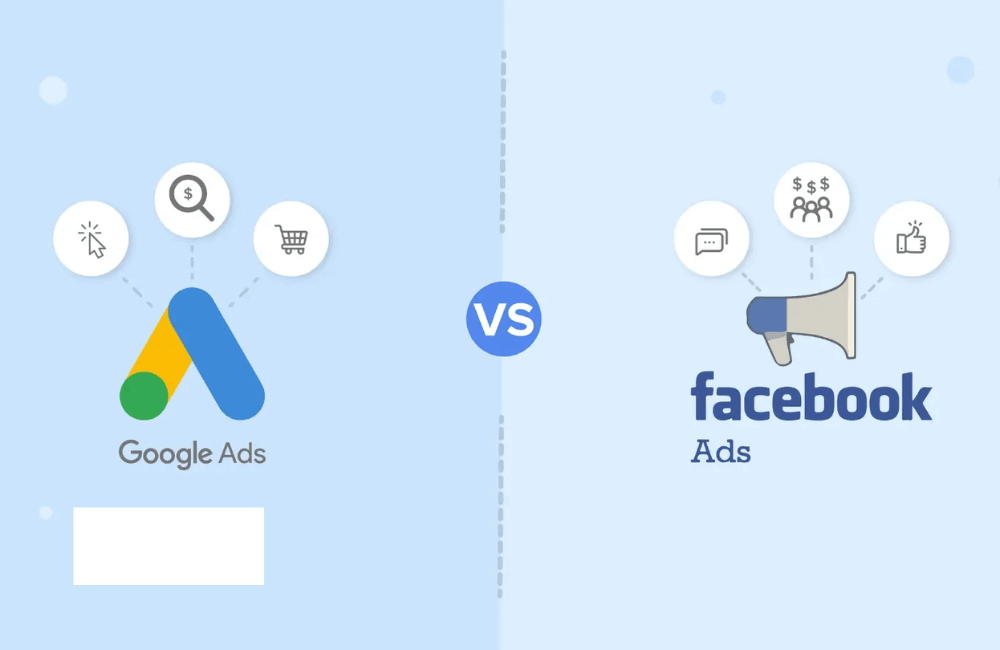
The key point that advertisers need to clearly understand is:
- Facebook ads are a Demand Generation Platform.
- Google Ads is a Demand Capture Platform.
More specifically, Facebook and Instagram are designed to grab attention and stimulate the latent needs of users. For instance, when someone is scrolling through Facebook, they might not have an immediate intention to buy a product, but a compelling video or a well-optimized ad image can spark interest, turning “don’t need yet” into “want to own.” This is the power of demand generation advertising.
Conversely, Google ads operate in the opposite direction; they appear when users already have a clear demand. For example, when someone types the keyword “buy genuine iPhone 15 best price” on Google, they are expressing a very specific purchase intent. At this moment, your ad showing up at the right time helps you convert a potential customer into a real customer more easily.
Although Facebook and Google both have over 4 billion users, their intent on each platform is completely different.
- On Facebook, users are “entertaining” themselves, and you need to capture their attention naturally and creatively.
- On Google, users are “seeking solutions,” and you need to appear at the right time with the appropriate message to close a deal quickly.
Facebook Ads vs Google Ads: Which Platform Delivers the Highest ROI in 2025?
When we work with businesses and advertisers, one of the most common questions is always: “Which platform provides the best return on investment (ROI), Facebook ads or Google ads?” To answer this, let us look at real data from over $50 million in ad spend across 500 global businesses, analyzed in the latest 2025 studies.
Google Ads
Google Ads continues to prove its solid position in reaching a high-intent audience, people who are actively searching for a product or service. According to the data, Google ads deliver an ROI 20–30% higher than Facebook ads for this audience segment.
Short-term Google ad campaigns typically achieve an average ROAS of approximately 3.8:1 in the first quarter, and can exceed the 4:1 mark in high-value industries such as legal, insurance, SaaS, or real estate. This means that for every 1 USD invested, businesses can retrieve between 2 and 8 USD, depending on the level of campaign optimization and the quality of the landing page.
The industry-wide average conversion rate is 7.5%, and it even exceeds 10% in service industries with a clear customer journey. For example, a law firm running a Google search ad with the keyword “contract consultation lawyer” might see a conversion rate double that of a similar ad on social media.
Facebook Ads
While Google is strong in purchase intent, Facebook ads shine in terms of building brand awareness and long-term lead nurturing. According to reports, the average short-term ROAS for Facebook ads is about 2.9:1; however, when campaigns focus on expanding the target audience, promoting visual or lifestyle products, the ROI can increase to 4.8:1 or even higher.
Industries such as fashion, beauty, health, cosmetics, or lifestyle are typical examples. For instance, a cosmetics brand using Facebook ads to promote a new skincare product line often not only generates direct sales but also significantly increases brand awareness, encouraging customers to return to purchase in subsequent months.
In particular, advanced remarketing and AI-powered targeting have helped Facebook clearly improve the conversion rate. Thanks to the ability to automatically identify high-engagement users, Facebook campaigns are now achieving better performance year by year, while significantly reducing advertising costs (CPC) compared to the previous period.
A guide to choosing the right Ad Platform for your Business
Below, we will help advertisers understand the core differences between these two platforms so that they can make the most suitable choice in 2025.
Creating Visual Ad Strategies Through Facebook Ads
When talking about Facebook ads, we are essentially talking about the Meta advertising ecosystem, including Facebook, Instagram, Messenger, and Audience Network. This is currently the most pervasive advertising platform where images, videos, product collections, and creative content naturally blend into the stream of information users are viewing.
Unlike traditional TV commercials or rigid banners, ads on Facebook and Instagram appear subtly, offering more entertainment and emotional connection. Users can easily interact, comment, share, or even purchase directly without feeling “commercialized.” For example:
- A new fashion brand can use a video lookbook or a story ad on Instagram to quickly make an impression on young people.
- A cosmetics store can run a campaign using the reels ads format for a new product to spread the beauty trend.
This makes Facebook and Instagram the most effective demand generation platforms, especially for businesses that need to build a brand or introduce new products to the market.
When should you choose Facebook Ads?
If you are just beginning your advertising journey or own a new, unique product that no one is searching for directly, then Facebook Ads are the ideal place to start. For example:
- You are launching a new beverage brand, and no one knows the product name yet. Running Facebook Ads with creative videos will help viewers “know – like – remember” your brand.
- Or you are selling a soft skills course, but users are not searching for it specifically on Google. At this time, Facebook ads help you create demand by displaying the ad to the right group of interested people.
Facebook ads are suitable for campaigns aimed at increasing brand awareness, attracting followers, building a community, and creating demand from scratch.
Capturing available customer demand through Google Ads
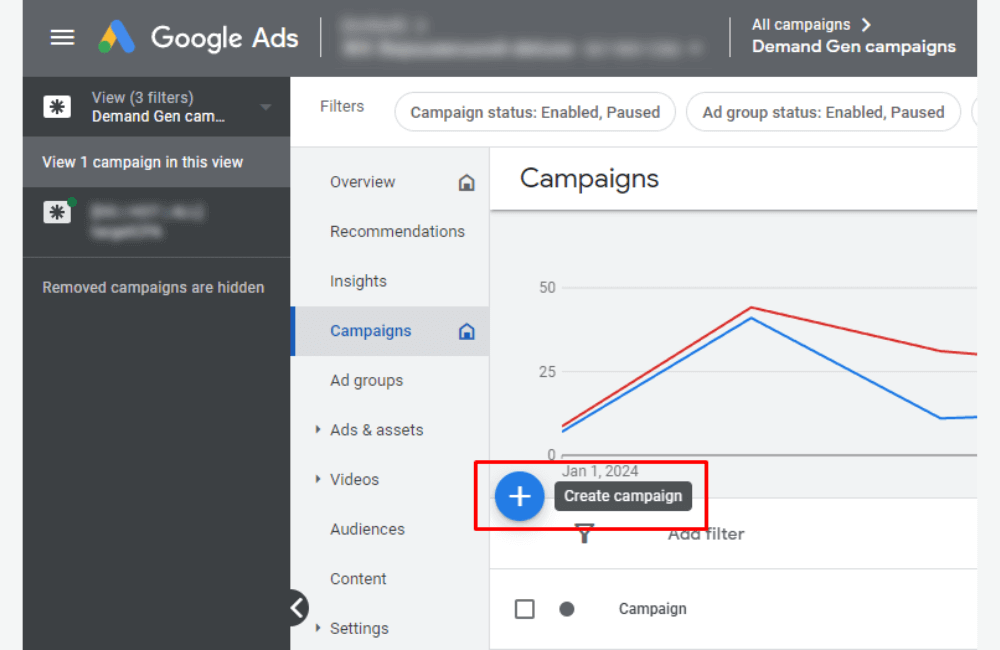
While Facebook focuses on creating demand, Google Ads is a tool for capturing existing demand. Users go to Google when they already know what they want, and this is the “golden” moment for advertisers to appear.
With Search Ads, your ad can appear right at the top of the search results page, bypassing years of SEO optimization that competitors strive to achieve. And the interesting thing is that many people do not even know they are clicking on a paid ad!
Specific examples:
- If you sell “ergonomic chairs,” when someone searches for the keyword “best ergonomic chair to buy,” your Google ad will show up first, right when they are ready to purchase.
- Or if you retail products, Google Shopping ads will help display images, prices, and product information directly on the search results, which is highly effective in driving purchasing decisions.
In addition, Google also offers many other campaign types, such as Performance Max, Display Ads, and YouTube Ads, allowing you to cover the entire journey.
Which platform should you choose for your business?
In reality, there is no absolute answer, as both platforms are powerful in their own ways. However, you can choose based on your business’s characteristics:
- Facebook ads: Suitable for small or medium businesses that sell unique products, have engaging visuals, need to build brand awareness, or create a community.
→ For example: fashion brands, handmade cosmetics, phone accessories, coffee shops, online courses, etc. - Google ads: Ideal for large brands, with a diverse product catalog, and customers who actively search.
→ For example: e-commerce platforms, dental centers, beauty brands, or digital service companies.
However, the smartest strategy is to combine both platforms:
- Facebook Ads to attract, create demand, and introduce the brand.
- Google Ads to convert that demand into actual revenue.
When these two channels are optimized simultaneously, your business will cover the entire customer journey from awareness to purchase action.
In 2025, choosing between Facebook ads and Google ads is no longer a question of “which one to choose” but “how to combine them.” Each platform has its own strengths, so smart advertisers should test, measure, and optimize both channels simultaneously to achieve the highest ROI for their business.
Frequently asked questions
If you have a limited budget and want to build brand awareness, Facebook ads are a more suitable choice. But if you sell products with a clear search intent, Google Ads may bring better conversions.
Yes. Combining both platforms helps you cover the entire customer journey from when they are not yet aware of the brand (via Facebook) to when they actively search to make a purchase (via Google).
💬 Contact now for free consultation from BHW!
- Website: https://vi.blackhatworld.io/
- Telegram: @bhw_agency
- Whatsapp: +84819001811
- Wechat: bhwagency
- Email: [email protected]
This article is also available in other languages: